Peatlands & private finance: recipe for …?!

In late summer of 2022, myself and my wonderful frolleague, Dr Conny Helmcke, were awarded funding to work on an interdisciplinary project with the broad remit of exploring how communities in rural Scotland are making decisions about whether, why and how to restore peatlands. I thought Conny’s work on environmental justice-related themes was very cool and wanted to learn from her, so approached her to see if we could work together. A few months later, we were awarded some funds from the University of St Andrews (with thanks!) to hire a research assistant, who could collect data to explore this theme (Conny and me being ‘tied up’ with teaching). We are ever grateful to Ewan Jenkins for doing such a fantastic job of building the relationships and understanding central to the success of this project, and in the depths of a Hebridean winter.

The main output of the project, as outlined below, is a set of online (and print, on request) resources for the crofting communities that we worked with in rural Scotland. We have also published a Correspondence piece in Nature (with an open access draft here) and an article for The Conversation. And back in March of 2024, as a result of submitting evidence to a formal call, I was invited to attend the 12th Meeting of the Scottish Parliament’s Committee on Net Zero, Energy and Transport, as an invited witness to give evidence on the opportunities and impacts of natural capital finance in the Scottish context. The first set of witnesses (principally representing private landowners across Scotland) focused on the importance of private finance (and the importance of derisking private finance using public funds) for nature restoration and the achievement of net zero goals/climate change mitigation; the second set of witnesses (from Community Land Scotland, Scottish Wildlife Trust, and researchers, including me) focused on the current challenges of the focus on private finance for achieving these same goals. Here are some links to: the agenda for the session, our written evidence (Clerk Paper 1 – Annexe C), the recording of the session (starting at 10:48:00) and the Official Report. The experience was as interesting and enlightening (about the/our political process) as it was frustrating.

There are so many questions still to answer around how we can support peatland restoration whilst supporting communities, in the current climate of carbon markets, amongst other uncertainties. I hope this project doesn’t end here.

** 

To give some more information on the project and resources for communities, here is an article that I wrote for the International Peatland Society’s Peatlands International quarterly communication.

Peatland ACTION assisted restoration of peatlands underway in the north of Lewis, Outer Hebrides. (Credit: Lydia Cole)

If you’re a crofter in Scotland, wanting to restore the peatland ecosystems within your communal grazing land, how do you go about it? If you have the opportunity to take advantage of public funds so that restoration costs you nothing, should you take it? Or should you agree to sell the carbon locked up in your newly restored peatland to a company or a broker, to provide you with extra revenue and them with credits to offset their emissions? What are the costs and benefits of different pathways to restoration? And how might you gain, or lose, from peatland restoration itself?

In October of 2023, colleagues and I launched an online set of resources designed to answer these questions for crofting communities living in rural Scotland, to assist them in making decisions about how to navigate peatland restoration. (Crofters are individuals who have tenure or use of a small plot of land, i.e., a croft, traditionally in the Highlands and Islands of Scotland, where commonly part of their income is obtained from farming that croft and a larger area of communal land to which they have rights to graze animals.) The website housing these resources: Peatland Restoration: A Guide for Crofting Communities, contains a downloadable Executive Summary and extended Booklet outlining some of the key considerations for crofting communities embarking on, or under pressure to engage in peatland restoration activities. Alongside these, we provide responses to common questions that arose during a period of field research carried out in the spring of 2023 in Lewis, Outer Hebrides, in the form of FAQ, as well as a glossary of terms, to facilitate understanding of the unfamiliar words and complex phrasings common in discussions around carbon credits and associated carbon markets. All of these resources (bar the FAQ) are available in English and Gáidhlig (Scots Gaelic), reflecting the languages spoken in the communities they have been designed for.

These crofter-facing guidance materials are the result of a nine-month project funded by the St Andrews Interdisciplinary Research Support scheme, awarded from the University of St Andrews, Scotland. The research underpinning the resources was carried out by a team from the University of St Andrews, led by myself and Dr Cornelia Helmcke, with Ewan Jenkins employed as a Research Fellow, and Dr Bobby Macaulay, (coordinator of the Community Landownership Academic Network (CLAN), University of the Highlands and Islands) and Drs Shona Jenkins and Milinda Banarjee (University of St Andrews), as Co-Investigators. At project inception, Cornelia and I engaged various people to understand if our research questions were pertinent and could yield information of use in the development of informed policies on peatland restoration in rural Scotland. Bobby Macaulay provided invaluable feedback on our ideas and contacts for the project, one of which was the Peatland ACTION Officer in Lewis, Ben Inglis-Grant. We thank him for the time and wisdom he shared with us over the full course of the project. Peatland ACTION is the government scheme that funds and provides logistical support for the restoration of peatlands in Scotland. Peatland ACTION is not to be confused with the Peatland Code, a UK Government-backed scheme that acts as a standard against which carbon credits resulting from peatland-based restoration projects can be verified, enabling them then to be sold on the domestic voluntary carbon market. Our project explored the challenges and opportunities associated with the different pathways to restoring peatland ecosystems within crofting communities in rural Scotland, in order to provide insights for what is necessarily a rapidly developing area of policy around natural capital markets and net zero accounting. For an important critique of the carbon market in the context of achieving net zero in the UK, pertinent to the drive for peatland carbon credits, we recommend Andy Wightman’s blog.

The website and associated resources are being disseminated to crofting communities and organisations, researchers and policy groups, and anyone who might be able to make use of the information to better understand what support and regulation is needed to help communities navigate the new potential to earn money from carbon held within, or in the case of peatlands, not emitted from landscapes if they are restored (i.e., avoided emissions if ‘Business as Usual’ scenarios continued). If you have feedback on the resources and/or would like physical copies of the Executive Summary or Booklet, please email peatlandguide@st-andrews.ac.uk.

Food production in the Fens: navigating towards Net Zero?

Reposting here an article that I wrote recently for the International Peatland Society’s (IPS) Peatlands International (PI) quarterly publication. You can get access to the full publication (after becoming a member), access the back-catalogue for free, and find out who to contact if you want to write for PI here. I post this with thanks to Prof. Sue Page, for commenting on the drafted version, and to Susann Warnecke, for sending me to the FenlandSOIL gathering on behalf of the IPS, and generally for running the IPS ship so fantastically.

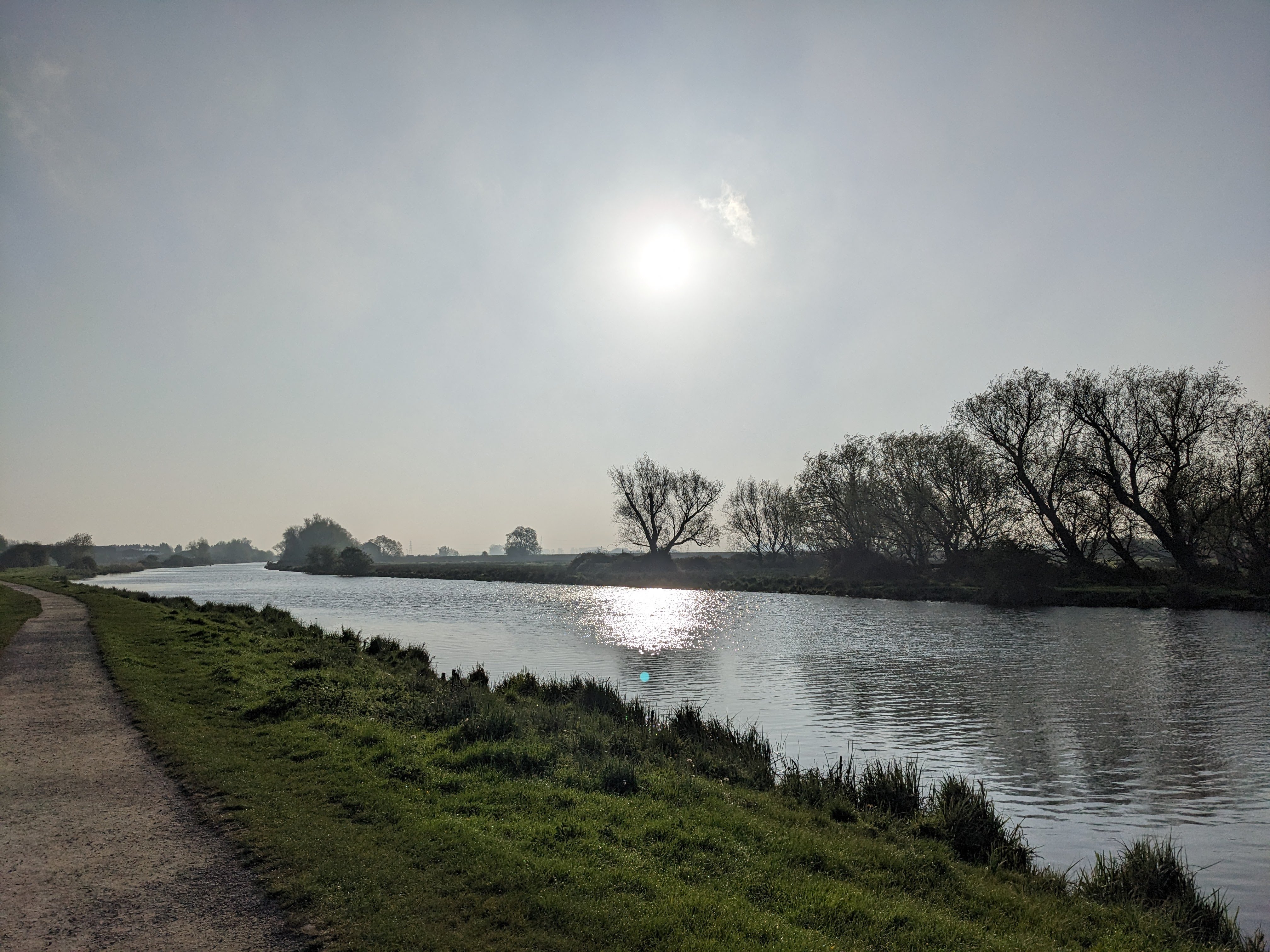
If you have ever enjoyed a fresh salad grown on English shores, it is likely to have comprised ingredients harvested from the Fens. A third of the country’s fresh vegetable produce comes from this region; an area of c. 3,900 km2, rich in peat. The Fens, situated across the counties of Lincolnshire and Cambridgeshire, and small parts of Suffolk and Norfolk, comprise lowland agricultural peat soils, the working of which generates some £3 billion each year and employs over 80,000 people. These people and resident communities share this region with 13,000 species of plants and animals, which live within and outside of the agricultural matrix.

Another key characteristic of the Fens is that its use in food production is “an obstacle” to achieving Net Zero by 2050. Centuries of farming in this peat-rich landscape has led to vast, largely unquantified carbon emissions and to extensive wastage of the peat soil. With United Nations Framework Convention on Climate Change (UNFCCC) signatory nations now required to measure, report, and reduce their greenhouse gas emissions across different sources in line with their Nationally Determined Contributions (NDCs) to mitigating climate change, emissions from farming peat soils need to be addressed.

Cue the formation of FenlandSOIL: a cross-sectoral group tasked with exploring how farming in the Fens can be achieved in a carbon-neutral way. This farmer-led consortium was established in 2021, and now has over 80 members from the farming community, academic institutions, and multiple other public and private sector organisations.

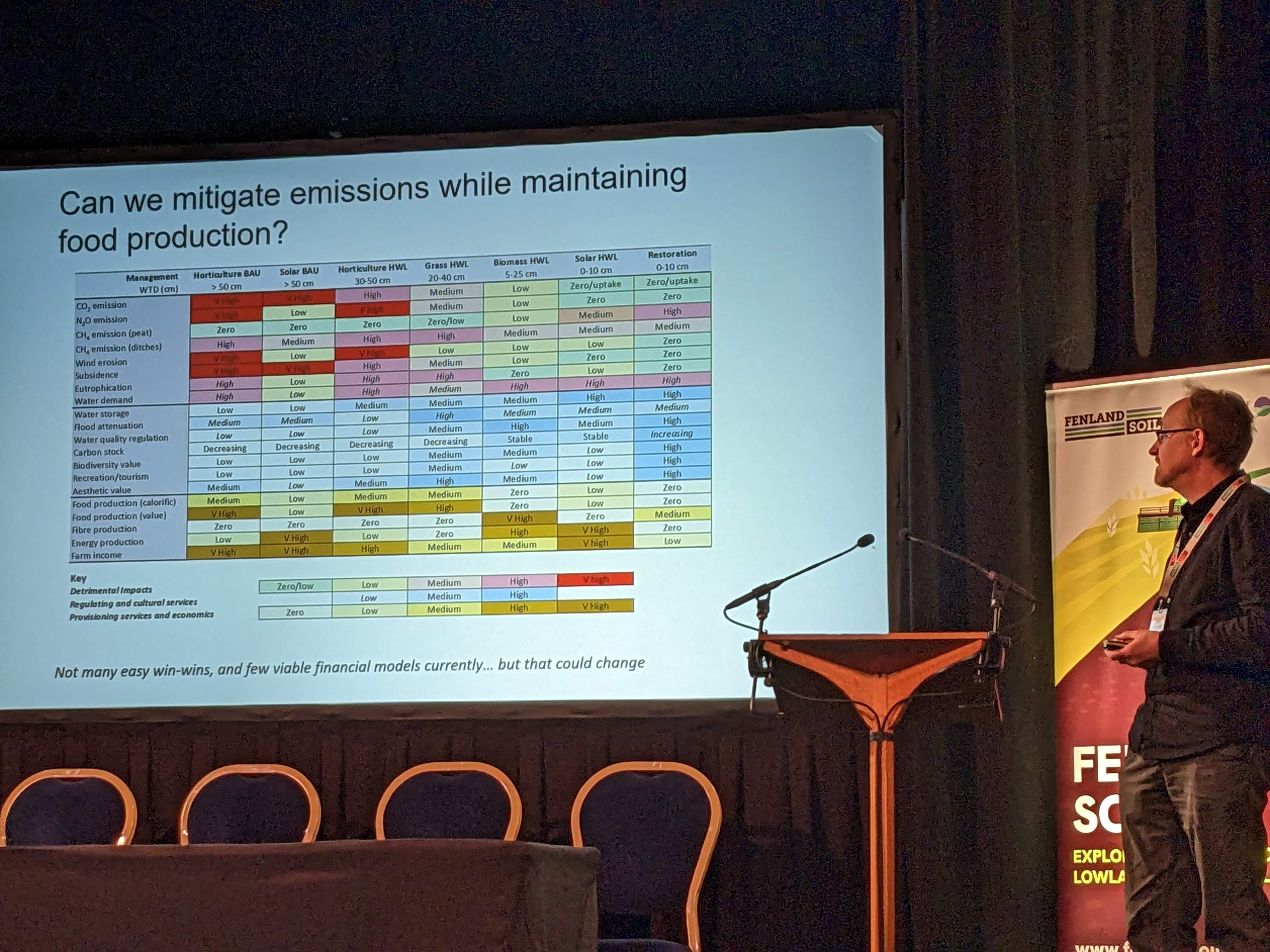
One of the FenlandSOIL associated partnerships is that between the World Wildlife Fund (WWF) and UK-based supermarket chain, Tesco. The goal of their collaboration, and of the FenlandSOIL consortium, is to answer the billion-dollar question: can we mitigate emissions whilst maintaining food production?

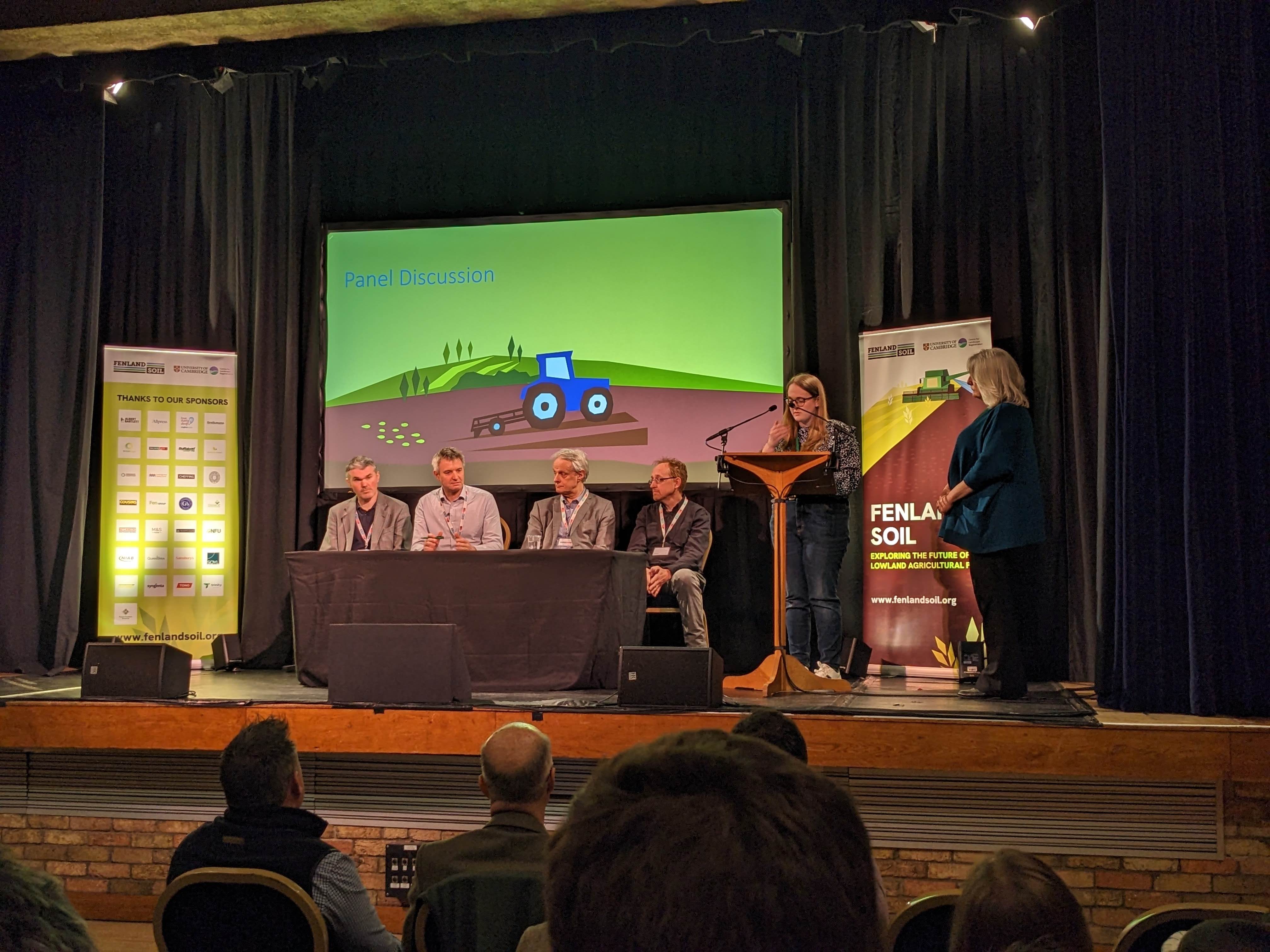
On 17th and 18th April, 2023, over 200 delegates gathered to explore this question, in the small city of Ely in East Cambridgeshire, perched on an island of hard sandstone within a fenland scape. Over the two days, attendees had a chance to mix with individuals from UK Government agencies, universities (including the key collaborators from the University of Cambridge), the National Farmers Union of England and Wales, Wildlife Trusts, supermarket chains, farm equipment suppliers, and an inspiring mix of others.

Alongside the incoming Scientific Officer, Dr Örjan Berglund, I was fortunate to attend this fascinating, inspiring, and at times frustrating meeting of minds on behalf of the International Peatland Society. After attending the two days of presentations, observing smaller group discussions and conversing with a range of different stakeholders in the conference breaks, I identified some common themes that seemed to emerge in this cross-sectoral space. Here are some of my learnings from the event:

  • No ‘one size fits all’ when it comes to developing interventions that will reduce emissions whilst enabling the food production to continue across farms in this peat-rich landscape. We need a framework to support the development of local solutions, which are bottom-up….
  • …and farmer-led. Of course, there is no one size of farmer, with each having a different relationship with the landscape they are farming, but every farmer will have knowledge and experience of that multidimensional space, which must feed heavily into each stage of intervention planning and practice. The depth of knowledge, understanding and passion of farmers attending the meeting was evident. Their voices must be present and centred in policy-facing discussions.
  • One skill-set farmers are often lacking is that required to carry out effective carbon management, being a relatively new role that the already hyper-skilled individuals are being tasked to take on. One farmer I spoke to was confused as to what the best approach to reducing emissions was for his farm – with his particular production system and land cover – after listening to multiple presentations advertising different emissions outcomes of different interventions for diverse production systems on different farms. An evidence-based approach is needed.
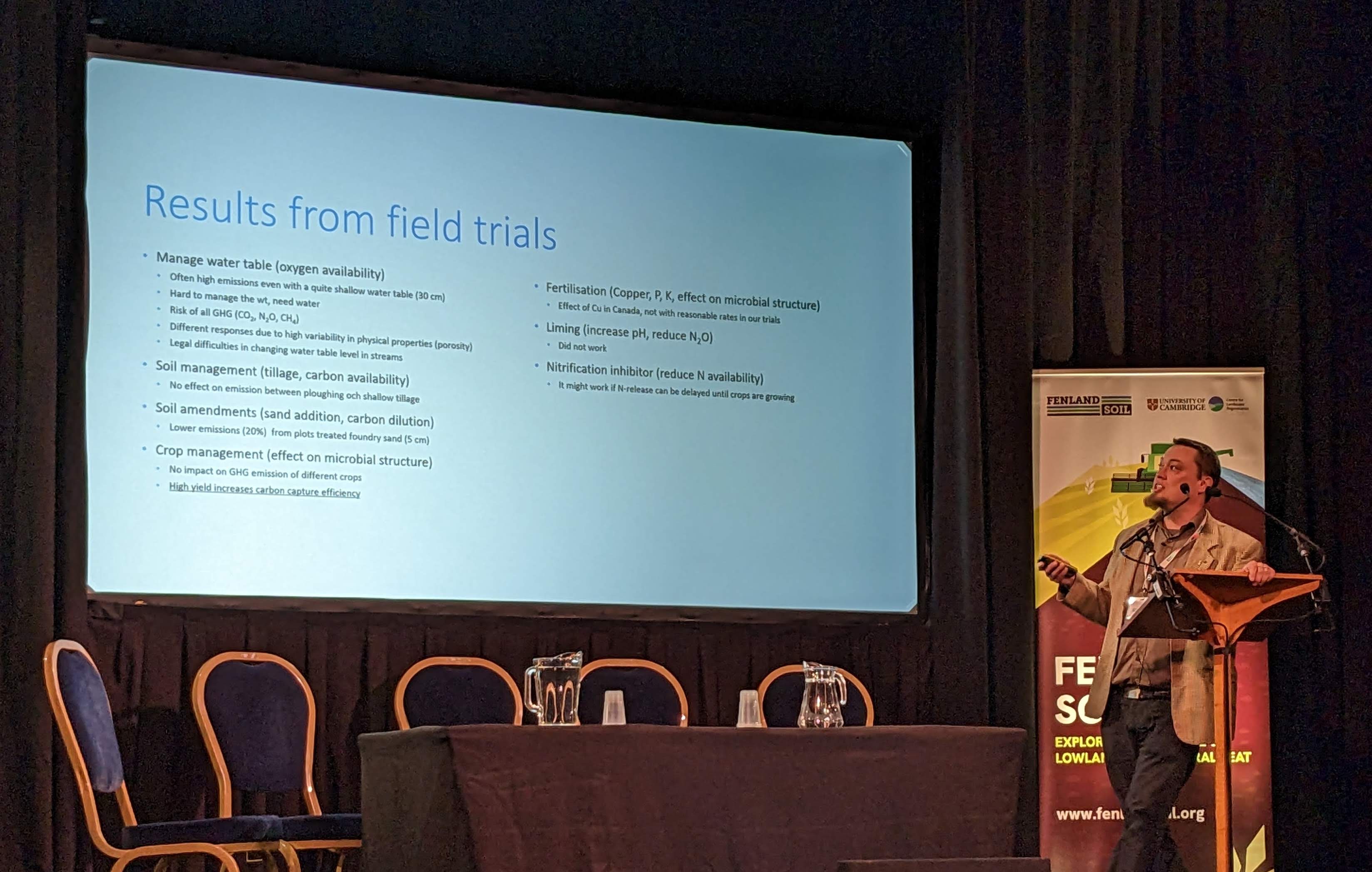
  • There was a call for that evidence-base to focus on “field-scale trials and innovations”; a continuation of the no ‘one size fits all’ principle. When evidence is often place-specific, incomplete, and associated with many uncertainties, packaging it into useful guidance for farmers is one of the ultimate challenges.
  • But whatever specificity of interventions are proposed, monitoring the changes in emissions, food production, soil health, species abundance, etc., and reporting those verified changes is essential, i.e., MRV – a feasible and effective Monitoring, Reporting and Verification procedure. We need to have standard, transparent, and feasible ways of assessing whether interventions are going any way to reducing GHG emissions over time, whilst not jeopardizing food production, livelihoods and other emergent properties of these systems.
  • The somewhat unpredictable elephant in the room – which could undermine even the most well-designed peatland carbon management plans – is climate change. This is seen as a large risk to food production and to climate change mitigation interventions. We need to understand more about how future climatic drying and erratic weather patterns may influence peatland ecosystem health, in order that current and near-future investments in restoring wasted peats are not themselves wasted.
  • The best way of climate-proofing any peatland is to manage the water table. There were plenty of discussions on storage, sharing, and managing risks associated with water across the Fens. From being a resource in abundant supply in this wetland-scape in the past, the lack of water resulting from hundreds of years of drainage is now a significant risk. Internal Drainage Boards (IDBs) are now the institutions who wield the power in these agricultural landscapes; they are in charge of decisions that can determine the economic and literal productivity of farms through water abstraction licencing. Although with transformative consequences on farming, imminent reform in licencing to reduce the exploitation of river water may create opportunities for peatland restoration. However that reform manifests, a short-term reduction in demand for water is needed across the Fens, alongside long-term local planning of water resource management, where the restoration of rivers to “good ecological status” is set as the achievable goal. As an aside, we were also reminded that water-level management in drains is not the same as water-table management in fields; each process plays a separate, yet interconnected role in peat soil conservation and food production.
  • The IDBs are, of course, not acting independently but in line with national legal frameworks for water management. When it comes to policies, Government intervention, be it through legislation or financial support, is seen as a double-edged sword. Although it may not be clear how the Government could support a strategy for food production in the Fens and the variety of lowland peatlands across the UK, there were proposals for how top-level support could reduce barriers to farming in these landscapes. There were discussions relating to England’s reformulated agricultural payment schemes, e.g., the post-Brexit Environmental Land Management scheme (ELMs), and how multiples of these could be ‘stacked’ together on one farm to increase the resources available to farmers to manage these complex landscapes. Where do farmers get the equipment, the seed-stocks, and other materials and expertise (in some cases) necessary for restoring their peatlands? Could logistical barriers also be reduced through policy change?

  • Or ultimately, is the lack of financial support the key challenge? Certainly, comments were made about the current lack of financial models that account for low-emissions farming practices on peatlands. We need a financial vision and framework, to accompany a logistical one.
  • One of these frameworks is carbon financing, and more specifically, the Peatland Code 2.0. The IUCN UK Peatland Programme has worked to revise this standardised procedure for valuing the carbon held in peatlands under protection, with areas of the Fens now eligible for financial investment through the voluntary carbon market under this scheme.
  • Regenerative agriculture is the future, we are told! I would like to believe this. But I am unsure what this is, exactly, and what it might look like in lowland peatland settings. I was reminded of the need to carefully define the terms we are using, lest they become straw men and lose their meaning, and thus power.
  • Whilst sharing learning and experiences across peatland regions can be valuable, we also need to appreciate the unique nature of the Fens. Lowland peatlands behave differently to those in the uplands; the latter being the subject of the majority of financial calculations and modelling for restoration. Lowland peatlands themselves come in a wide range of shapes and sizes….
  • Nuance matters. Variability in soil characteristics, water availability, and management practices across space and through time in the Fens need to be accounted for in any planning and practice. For example, the volume of Nitrous oxide emissions resulting from agriculture on peatlands may depend on the crop being cultivated and its in-field management; this detail matters.

To enable continued food production from the UK’s lowland peatlands, whilst mitigating (to some extent) carbon emissions from damaged peat soils, we need action now. We need a framework for local solutions. We need a field-scale, mosaic approach to interventions. We need to connect up communities and sectors across IDBs, and landscapes. And we need to create opportunities for social innovation. The FenlandSOIL gathering made an inspiring start.

Dr Lydia Cole
Coordinator of IPS Expert Group Peatlands and Biodiversity, University of St Andrews
lesc1@st-andrews.ac.uk

Fledging the nest: an early career event for the next generation of Conservation Ecologists

A month ago, on Friday 4th March, I was involved in a workshop for young (as in PhD and postdoc ‘young’) ecologists that aimed to give them the tools they need to nail a career in Conservation Ecology.  With limited funds in conservation (which by no means reflects the funds required by the crisis discipline, as Waldron and his buddies write about here), but an urgent need to get bright, enthusiastic young things to take the reigns, we thought this was an apt event with which to kick-start the revived British Ecology Society Conservation Ecology Special Interest Group (BES ConEco SIG – not much more digestible as an acronym!).  The SIG’s revival is thanks to the hard work, enthusiasm and novel ideas of the unstoppable Dr Nathalie Pettorelli, based at the Zoological Society of London (ZSL).  It’s quite an honour to be part of the Committee, and I’m excited by what the future holds for the group and its jolly followers.

My main role during last month’s event was to gather material for some blog posts, to provide post-event information for those that couldn’t attend (it was a sell out!).  Pasted below is the first post I wrote: Blog 1 of a six part series.  I also wrote Blog 4.  The others were written by Claudia, Heather and Kath, and posted on the ZSL Wild Science blog, BES blog and Journal of Applied Ecology’s The Applied Ecologist’s Blog.  Hopefully there are a few bits and bobs of advice that might be useful within.


Fledging the nest: an early career event for the next generation of Conservation Ecologists

This piece is written by Lydia Cole, Rezatec, BES Conservation Ecology SIG Liaison Officer@lydcole, Katherine Baldock, University of Bristol, BES Conservation Ecology SIG Early Career Rep @Kath_Baldock, Claudia Gray, Zoological Society of London, BES Conservation Ecology SIG Communications Officer @ClaudiaLGray, Heather Crump, Aberystwyth University, BES Conservation Ecology SIG Early Career Rep @hec72012

This blog has also been posted on the BES and ZSL Wild Science blogs.

event 1

Last Friday heralded the first training event of the revived BES Conservation Ecology Special Interest Group: an interactive workshop for Early Career Conservation Ecologists. Jointly hosted by the Zoological Society of London and the British Ecological Society, the event brought together a herd of experts, working in fields ranging from journal editing, to university lecturing and policy, to guide early career attendees through five interactive sessions.

The philosophy behind the day was to provide an active learning opportunity where the bright, enthusiastic cohort of PhDs and postdocs currently trying to enter the world of conservation could learn a range of skills that would better equip them for this challenge. And they flocked in their numbers, with over 65 gathering at the London Zoo, in view of the kangaroos, having travelled from as far afield as Falmouth to the south and Durham to the north.

Universities are busy places, full of busy supervisors, who do not always have the time to impart knowledge on how the world (of conservation) works and how best to get into it; this workshop attempted to bring that knowledge into one room and encourage the early career enthusiasts to tap into it.

The day was divided into five sessions, each an hour long, where participants spread themselves across five thematic groups:

  1. Funding
  2. Press and online media profile building
  3. Networking and CV development for non-academic careers
  4. Interview skills for academic careers
  5. Publishing

event 2

At each ‘station’ ( = a round table + experts x 2 + useful materials + Post-its (of course!)), attendees were asked to perform a series of tasks to engage them with the theme, ranging from seeing how many “useful” new contacts they could make in a quick-fire networking break-out, to matching abstracts to journals, drafting a BES small grant application and put together a communication strategy for a paper about to be published. In between tasks, there was plenty of time to mine the knowledge of the experts, who must have answered several thousand questions over the course of the day (thank you, experts!). And throughout, there was not a lecture in sight!

Informal feedback tells us it was a day well received:

To mark the event and share the knowledge gained from it, we will be running a series of blogs over the coming fortnight, with each post focusing one of the five workshop themes. So if you missed the event, check out the blogs….and watch out for the invitation to #conscareers17!

And remember: you can easily keep up-to-date with the Conservation Ecology SIG news by following us on Twitter @BESConservation and Facebook through the BES Conservation Ecology group page. Alternatively, you can join our mailing list by dropping an email toNathalie.Pettorelli@ioz.ac.uk

NHS for Soils needed!

Every month, the Parliamentary Office of Science and Technology releases several publications, known as POSTnotes, that aim to provide an easily digestible overview of research in different areas of science and technology, as a tool for policy makers.  One released this month is all about securing UK soil health, in additional to the principally-important parts about peat.  I’d definitely recommend reading it if you’re interested in learning of the current status and threats to this ‘renewable resource’.

Renewable is a slightly misleading word.  Peat is a renewable resource if we wait about 3,000 years between harvests.  Fossil fuels could also be renewable if we could hold off popping the kettle on again for another 300 million years or so.  There should probably be a time frame attached to each use of renewable, and a conservative one at that, based on the Precautionary Principle.

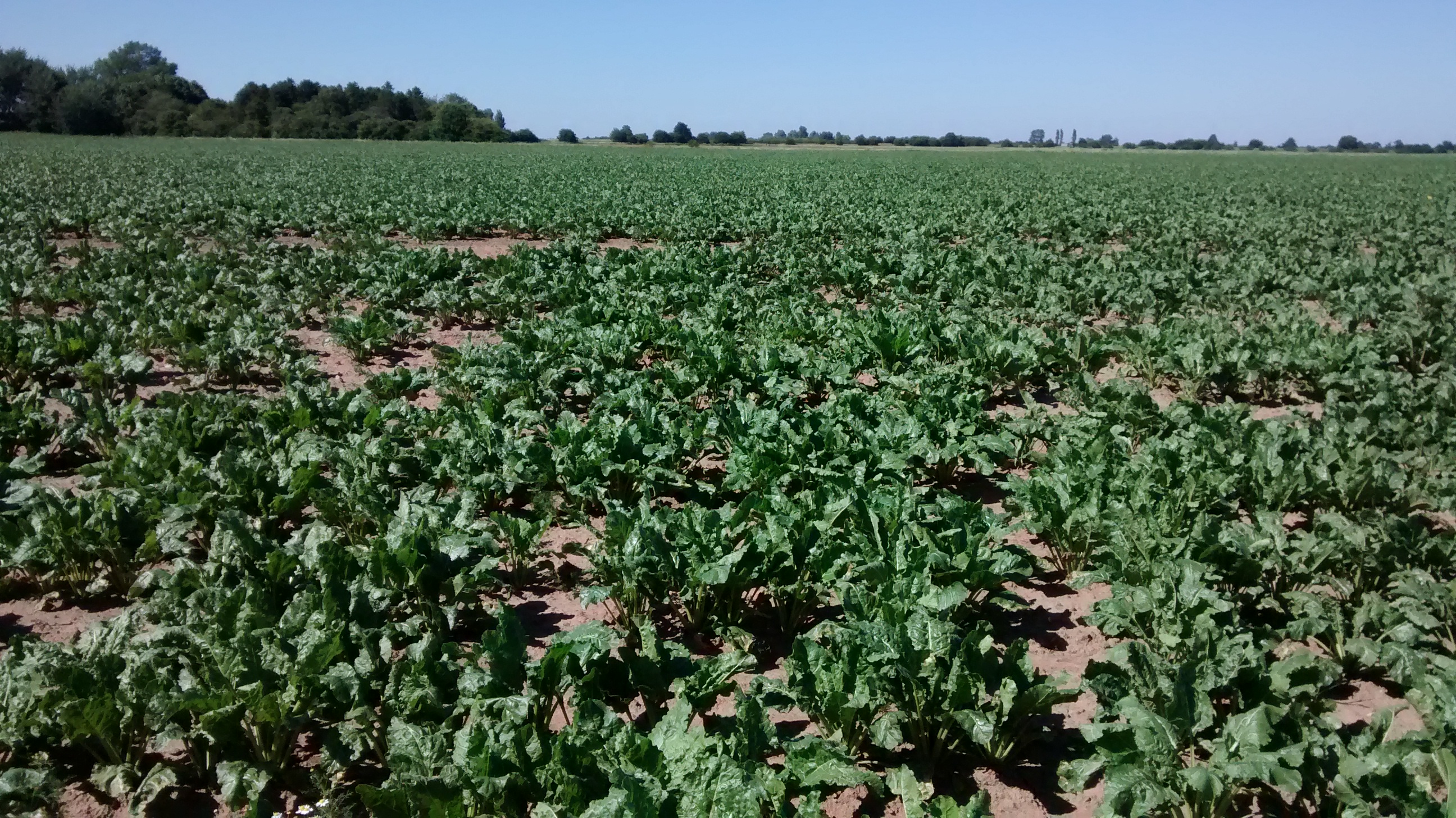
A maturing sugarbeet field in East Anglia.

A maturing sugar beet field in East Anglia.

We basically need some, or even one coherent and policeable policy that governs sustainable soil management in the UK (and Europe), so that we can adhere to the Government’s plan to “grow more, buy more and sell more British food” over the next 25 years.  The world needs our sugar beet and broad beans.  And we all so desperately need our soils.

Caged.

Every so often, the legend that is Corey Bradshaw publishes a Cartoon guide to biodiversity loss.  This one made me especially sad.  Perhaps because I saw several great people of the trees, stretching between bars in 4x4m round cages that they had been in for 20+ years, almost non-stop, in an orangutan care centre in Pangkalan Bun, Central Kalimantan, last year.  They didn’t have a home to go back to, and couldn’t be let out into the small patch of enclosed forest that the smaller orangs could hang around in during set ‘play’ times, in case they caused a problem.  Did we not cause their problem?