Commenting on carbon credits

I was invited by one of the Features editors at Business Green, “the UK’s leading source of information for the green economy” (Business Green, 2024), to write a response to a piece they’d recently published that claimed (in the title) that “The UK could lead the world on peatland carbon credits”. I accepted the challenge, in part because it would give me an opportunity to learn more about the way the peatland carbon market is currently perceived, and, provide an opportunity for me to clarify and communicate my argument as to why we need to approach this market with caution. Here’s the argument published in Business Green on 28th June 2024.

Careful investment is required to make peatland carbon credits work for the climate

An exciting economic opportunity does not necessarily equate to a feasible ecological one, writes St Andrews University’s Dr Lydia Cole

Up until recently, the UK’s peatlands – found in the murky space between terrestrial habitats and wetlands – only caught the attention of the government when land was sought for agriculture and forestry. Tax incentives in the 1970s and 1980s encouraged the drainage of these landscapes to pave the way for tree planting for timber production. But now, with international commitments under the Paris Agreement to reduce all avoidable sources of carbon emissions, our leaders are obliged to return to the UK’s damaged bogs, which are responsible for five per cent of the UK’s greenhouse gas emissions.

There is no question that blocking drains in peatlands is a necessary step towards restoring them to a healthy condition where they can again sink atmospheric carbon and contribute to mitigating global warming. There are, however, questions to answer around how we restore peatlands effectively, and how we pay for that restoration. After years of trial and error across the Northern Hemisphere, we are piecing together protocols, designing equipment and perfecting techniques for patching together peatlands, and expertise continues to grow, not least through Scotland’s publicly-funded Peatland ACTION programme.


Experience, and thus expertise, on how to fund effective peatland restoration is, however, lacking. In a recent article in BusinessGreen, the managing director of Ridge Carbon Capture Betsy Glasgow-Vasey claimed the UK could lead the world on peatland carbon credits. She may be right, but not right now. Here, I outline five areas of concern that need to be addressed if carbon credits from ‘restored’ peatlands are to contribute to our nation’s net zero goals.


Firstly, there is an assumption that the more money we invest in activities that, on paper, provide a clear pathway to climate change mitigation, the more mitigation we achieve. This is a fairassumption, but we all know how often climate-related goals are met in reality. And we all knowhow wicked and multifaceted a challenge mitigating climate change is. Take carbon credits, for example. They are supposed to lead to reduced greenhouse gases in our atmosphere. However, an UK-based individual or company can currently purchase as many carbon credits as they want via the voluntary carbon market – outside of schemes such as SBTi anyway – with no obligation to reduce their own avoidable emissions, or importantly, to have eliminated all of their avoidable emissions. If the limited stock of the UK’s carbon credits – we don’t have infinite land, let alone peatlands – is spent on such ‘greenwashing’ campaigns, we will run out of our capacity to offset the unavoidable emissions, an essential process on our pathway to achieving net zero.


There seems to be an equally prominent assumption that the reason the UK’s peatlands are not being restored at the target rate is a lack of funding. But recent research in Scotland has suggested quite the opposite. The promise of vast payments from private investors for units of carbon that are currently sat idol is stalling the progress of publicly-funded restoration programmes. Owners and managers of peat assets are facing decision paralysis in an information vacuum: selling carbon credits could mean a reasonable revenue for the current generation, but it could also mean they forfeit access to a valuable resource and leave their inheritors with a stranded asset. The stewards of peatland carbon credits need to understand what selling those credits entails, for them now, and for future stewards. Yet they are struggling to access this information.


Much like there is more than one type of peatland – blanket bogs, raised bogs and fens in the UK –there is more than one type of relationship, pattern of use, land ownership regime, etc. that these stewards have with these multi-use, cultural landscapes. A carbon offsetting scheme in the intensive agricultural landscape of the Cambridgeshire Fens will necessarily look very different to one that succeeds in the crofting landscapes of the Outer Hebrides. Commodifying carbon ignores the unavoidable, and important diversity inherent in each ‘credit’, and a one-size-fits-all market, that treats all peatlands and people the same, will fail.


This market will also fail to address the problem it was created to solve – climate change – if it does not differentiate between types of carbon credits. When you block a drain in a damaged peatland, the hope is that it will start to emit less carbon as a waterlogged landscape re-establishes. This intervention will reduce the volume of carbon being emitted from the peatland initially, and lead to avoided emissions if successful, relative to the business as usual state. Overtime, if drain blocking and revegetation is successful, and climatic drying mild, that peatland might remove carbon from the atmosphere. But peatland ‘restoration’ does not necessarily equate to carbon removals or true carbon offsetting. An exciting economic opportunity does not necessarily equate to a feasible ecological one.

The Scottish Government-funded Peatland ACTION program aims to set peatlands on a “road to recovery” – to carbon sequestration in line with Scotland’s Climate Change Plan outcomes. The conditions and outcomes tied to private investments, dictated and verified via the IUCN’s Peatland Code, are necessarily prioritising market resilience above ecological. It is, of course, imperative that credit schemes entail standards that imbue confidence in investors and are paired with a healthy market through which they can flow. However, the origin of any carbon credit is a unit of carbon, and in the case of peatlands, that unit represents a real block of dark, thick, wet peat, set in a healthy ecosystem. These blocks of carbon are fragile, only replaced on millennial timescales, and will not necessarily stay put through a price tag.

A key solution to all of these notable challenges is government regulation. Carbon credits must only be available for purchase by those companies that have eliminated all of their avoidable emissions and are looking to invest – not make profit from – nature-based offsetting opportunities. And we need to be more careful with the descriptors and phrases we use to rally the crowds: “high-integrity” offsets must hold true, and “level-up the peatland industry” – what does that mean? An obligatory carbon market, similar to the UK Emission Trading Scheme (ETS), building on the ‘polluter pays’ principle, needs to have the capacity to support flexible payment models that direct funding to locally-appropriate peatland restoration or responsible management schemes. Learning from the roll-out of the Environmental Land Management Scheme (ELMS) in England, or Piloting an Outcomes Based Approach in Scotland (PoBAS) could help to build a more nuanced, more effective approach to peatland restoration that supports rural communities and leads to long-term investment in the landscapes that could make or break our collective future.


Dr Lydia Cole is lecturer at the School of Geography & Sustainable Development at University of St Andrews; chair of the Expert Group: Peatlands and Biodiversity, within the Peatlands and Environment Commission of the International Peatland Society’s Scientific Advisory Board; and Chair of Conservation Ecology Special Interest Group at the British Ecological Society.

Peatlands & private finance: recipe for …?!

In late summer of 2022, myself and my wonderful frolleague, Dr Conny Helmcke, were awarded funding to work on an interdisciplinary project with the broad remit of exploring how communities in rural Scotland are making decisions about whether, why and how to restore peatlands. I thought Conny’s work on environmental justice-related themes was very cool and wanted to learn from her, so approached her to see if we could work together. A few months later, we were awarded some funds from the University of St Andrews (with thanks!) to hire a research assistant, who could collect data to explore this theme (Conny and me being ‘tied up’ with teaching). We are ever grateful to Ewan Jenkins for doing such a fantastic job of building the relationships and understanding central to the success of this project, and in the depths of a Hebridean winter.

The main output of the project, as outlined below, is a set of online (and print, on request) resources for the crofting communities that we worked with in rural Scotland. We have also published a Correspondence piece in Nature (with an open access draft here) and an article for The Conversation. And back in March of 2024, as a result of submitting evidence to a formal call, I was invited to attend the 12th Meeting of the Scottish Parliament’s Committee on Net Zero, Energy and Transport, as an invited witness to give evidence on the opportunities and impacts of natural capital finance in the Scottish context. The first set of witnesses (principally representing private landowners across Scotland) focused on the importance of private finance (and the importance of derisking private finance using public funds) for nature restoration and the achievement of net zero goals/climate change mitigation; the second set of witnesses (from Community Land Scotland, Scottish Wildlife Trust, and researchers, including me) focused on the current challenges of the focus on private finance for achieving these same goals. Here are some links to: the agenda for the session, our written evidence (Clerk Paper 1 – Annexe C), the recording of the session (starting at 10:48:00) and the Official Report. The experience was as interesting and enlightening (about the/our political process) as it was frustrating.

There are so many questions still to answer around how we can support peatland restoration whilst supporting communities, in the current climate of carbon markets, amongst other uncertainties. I hope this project doesn’t end here.

** 

To give some more information on the project and resources for communities, here is an article that I wrote for the International Peatland Society’s Peatlands International quarterly communication.

Peatland ACTION assisted restoration of peatlands underway in the north of Lewis, Outer Hebrides. (Credit: Lydia Cole)

If you’re a crofter in Scotland, wanting to restore the peatland ecosystems within your communal grazing land, how do you go about it? If you have the opportunity to take advantage of public funds so that restoration costs you nothing, should you take it? Or should you agree to sell the carbon locked up in your newly restored peatland to a company or a broker, to provide you with extra revenue and them with credits to offset their emissions? What are the costs and benefits of different pathways to restoration? And how might you gain, or lose, from peatland restoration itself?

In October of 2023, colleagues and I launched an online set of resources designed to answer these questions for crofting communities living in rural Scotland, to assist them in making decisions about how to navigate peatland restoration. (Crofters are individuals who have tenure or use of a small plot of land, i.e., a croft, traditionally in the Highlands and Islands of Scotland, where commonly part of their income is obtained from farming that croft and a larger area of communal land to which they have rights to graze animals.) The website housing these resources: Peatland Restoration: A Guide for Crofting Communities, contains a downloadable Executive Summary and extended Booklet outlining some of the key considerations for crofting communities embarking on, or under pressure to engage in peatland restoration activities. Alongside these, we provide responses to common questions that arose during a period of field research carried out in the spring of 2023 in Lewis, Outer Hebrides, in the form of FAQ, as well as a glossary of terms, to facilitate understanding of the unfamiliar words and complex phrasings common in discussions around carbon credits and associated carbon markets. All of these resources (bar the FAQ) are available in English and Gáidhlig (Scots Gaelic), reflecting the languages spoken in the communities they have been designed for.

These crofter-facing guidance materials are the result of a nine-month project funded by the St Andrews Interdisciplinary Research Support scheme, awarded from the University of St Andrews, Scotland. The research underpinning the resources was carried out by a team from the University of St Andrews, led by myself and Dr Cornelia Helmcke, with Ewan Jenkins employed as a Research Fellow, and Dr Bobby Macaulay, (coordinator of the Community Landownership Academic Network (CLAN), University of the Highlands and Islands) and Drs Shona Jenkins and Milinda Banarjee (University of St Andrews), as Co-Investigators. At project inception, Cornelia and I engaged various people to understand if our research questions were pertinent and could yield information of use in the development of informed policies on peatland restoration in rural Scotland. Bobby Macaulay provided invaluable feedback on our ideas and contacts for the project, one of which was the Peatland ACTION Officer in Lewis, Ben Inglis-Grant. We thank him for the time and wisdom he shared with us over the full course of the project. Peatland ACTION is the government scheme that funds and provides logistical support for the restoration of peatlands in Scotland. Peatland ACTION is not to be confused with the Peatland Code, a UK Government-backed scheme that acts as a standard against which carbon credits resulting from peatland-based restoration projects can be verified, enabling them then to be sold on the domestic voluntary carbon market. Our project explored the challenges and opportunities associated with the different pathways to restoring peatland ecosystems within crofting communities in rural Scotland, in order to provide insights for what is necessarily a rapidly developing area of policy around natural capital markets and net zero accounting. For an important critique of the carbon market in the context of achieving net zero in the UK, pertinent to the drive for peatland carbon credits, we recommend Andy Wightman’s blog.

The website and associated resources are being disseminated to crofting communities and organisations, researchers and policy groups, and anyone who might be able to make use of the information to better understand what support and regulation is needed to help communities navigate the new potential to earn money from carbon held within, or in the case of peatlands, not emitted from landscapes if they are restored (i.e., avoided emissions if ‘Business as Usual’ scenarios continued). If you have feedback on the resources and/or would like physical copies of the Executive Summary or Booklet, please email peatlandguide@st-andrews.ac.uk.

I apologise for going ‘Green’

I published a paper earlier this month, all about peatlands in tropical latitudes. (Surprising, eh!) It proved an unexpectedly great opportunity to work with a new and interdisciplinary bunch of co-authors….

https://platform.twitter.com/widgets.js

And I created my first ‘thread‘! It seems to be what one does now to spread the word about new published research. My main incentive for tweeting, however, was to share the ‘personalised’ link I had been sent by the publisher, Elsevier, as corresponding author. Anyone interested can download the paper, for free, for the first 50 days post-publication. After that, the outcome of two years of information gathering by 10 people and many 1,000s of hours of publicly-funded research before that, will only be accessible to people from universities or other institutions that can afford the annual subscription to the journal, Anthropocene. Because this review paper had been unplanned when applications for research and dissemination funding were written, and was completed outside of one single research project, pooling time and resources from multiple people funded by multiple sources, we didn’t have the £2,000+ Article Publishing Charge to publish it via the Gold Open Access route. Instead, we opted for the shady back-alley route: Green Open Access. This means making the peer-reviewed, accepted version of our manuscript (the version accepted after the final review) available on our institutional website (e.g., here). I am certainly pleased that this is an option (after a 12-month embargo, it seems!*), but it does make finding the article an online adventure that time-poor academics and (often) under-resourced practitioners might opt out of. So for now, I apologise for not going for ‘gold’…

https://platform.twitter.com/widgets.js

And soon, perhaps we won’t all have to find pots of gold at the end of the rainbow to make new knowledge available (atleast in principle) to everyone.

*There’s an unhelpful loop-hole I just found out about, so here, legally, is the Author Accepted Version of the manuscript:

Cole, L.E.S., Åkesson, C.M., Hapsari, A.K., Hawthorne, D., Roucoux, K.H., Girkin, N.T., Cooper, H.V., Ledger, M.J., O’Reilly, P. & Thornton, S.A. (2022) Tropical peatlands in the anthropocene: Lessons from the past. Anthropocene. Author accepted manuscript.

A guide to building (interdisciplinary) bridges

Today, Althea Davies and I launched a guidebook. Nope, it’s not a guide to our local peatlands. It’s a Guide to Better Science on Interdisciplinary Research, published by the British Ecological Society and available to download for everyone, for free. We were invited to create the guide after running a workshop on tools of the interdisciplinary trade at the British Ecological Society Annual Meeting in 2019. Since then, we’ve been gathering information and contributions from some inspirational researchers, who reflect deeply on how to make interdisciplinary research (more) effective. We’re so grateful for their wise input, and for the guidance offered by Kate Harrison, the BES’ expert in-house Editor. I can’t fault my pretty great co-author either!

You can learn more about why we wrote the guide through our post on People and Nature’s Relational Thinking blog. And if you do read the guide, and find it useful…or lacking, we would love to hear.

The future of Southeast Asia’s tropical peatlands

Nine years, five jobs, four cities and three paper rejections….and I’ve finally got the ultimate chapter of my PhD published. It’s been a journey! There’s so much I could write here about haphazard directions, happenstance, failure, resilience, the importance of ice-cream, etc., but I won’t. I hope there’ll be time for any helpful reflections in non-Zoom person soon. For now, here is the article: The future of Southeast Asia’s tropical peatlands: Local and global perspectives, free to download for the next 50 days (thanks for the token, Elsevier). And thanks to all of those people, both acknowledged in it and not, who have been ‘there’ over the last nine+ years.

The “graphical abstract“.

And paper’s “highlights”:

  • People have occupied Sarawak’s coastal peatlands for c. 200 years.
  • In the last century deforestation & peatland conversion have been widespread.
  • Local stakeholders perceive few challenges & many opportunities in using peatlands.
  • This conflicts with the international community promoting peatland conservation.
  • Differences in knowledge between local & global communities need to be addressed.

If any one of you out there reading do actually read this overly wordy piece and have feedback to share, I would love to hear it.

A story of flaming bogs in Borneo

I’ve made a pact with myself that I will write a plain language summary for each paper I publish as the first author, to make my work more accessible for people beyond the ivory tower.  Some journals, e.g. People and Nature, now encourage this for each of their publications.  Whether you believe or not that scientists have a role in advocacy, I believe that sharing the treasure of knowledge with the people that funded our adventure is our responsibility.  And perhaps it’s better to tell the story with scientific facts, than ‘facts’ derived through alternative means?  Here is my first attempt at an accessible summary for my last publication. (Though it’s still too sciency, a good friend pointed out – I’ll try for properly plain next time!  All comments welcome!)

Over the past year, it’s been rare to pass a day without hearing of forests burning, whether in Australia, Brazil or Siberia.  The frequency and intensity of forest fires seem to be increasing, with devastating impacts on people and nature.  But fires in forests are not a new phenomenon and can be vital to the resilience of these ecosystems.  Historical and palaeoecological work can provide context from which to compare these contemporary fires and provide evidence to demonstrate the impact of management and policy.

One type of forest that has gained a global reputation in recent decades for its spectacular fires is degraded tropical peat swamp forest.  In an intact state, these waterlogged ecosystems accumulate carbon under their prevailing anaerobic conditions, making them hugely important for mitigating the effects of rising GHG emissions.  But are fires unique to degraded tropical peatlands or do intact peatlands burn too?

Our recent paper* answered this question for three peatland sites along the coast of northern Borneo, within the Malaysian state of Sarawak.  We collected a set of peat cores from each site and spent many hours in front of the microscope gathering data on elements of the landscape over the last 7,000 years.  Fossil pollen grains were identified to provide knowledge on the floral components of the landscape over time and distinguish major ecosystem types.  Fossil charcoal particles were counted to reconstruct past fire regimes in these swamps, including incidences of forest burning that were above the background levels.  We also looked at a wide range of historical and contemporary literature to explore the interactions that people have had with these peatlands over the last 500 years: the approximate time of people’s arrival in the flooded coastal forests, the changes in land titling and the political pressures on land management in recent millennia.

Our results demonstrate that intact tropical peatlands do burn.  They probably burnt more in years when the El Niño Southern Oscillation (ENSO) – a climatic phenomenon that brings drier, warmer weather to this region in irregular, sub-decadal intervals – was stronger, but the peat swamp forest seemed to recover even from these more intense fires.  However, cue people’s entry into the story, c. 1850s, and the narrative changes.  Fossil charcoal levels reach unprecedented levels, in parallel with indicators of deforestation.  And the peat swamp forest shows signs of losing its long-standing stability – the ecosystem’s resilience appears to be compromised by the simultaneous forces of fire and deforestation.

Many of the forests standing in the Anthropocene have been degraded.  Their resilience has been compromised by unusually low precipitation (resulting from regional climatic drying) or by management interventions that disrupt natural disturbance regimes, or by both, pushing them beyond the limits of their ecological memory.  Our work suggests that tropical peatlands have recovered from episodes of burning throughout the Holocene.  But the presence of people, agriculture and fire in peatlands seems to be a recipe for disaster.  There is no shortage of contemporary literature and news reports supporting the notion that a drained peatland burns.  Our work contributes to the common narrative that for climate change mitigation and for the universal long-term benefit of people and nature, drainage and deforestation are not compatible with sustainable management of tropical peatlands.


*Cole, L.E.S., Bhagwat, S.A., and Willis, K.J. (2019) Fire in the Swamp Forest: Palaeoecological Insights Into Natural and Human-Induced Burning in Intact Tropical Peatlands. Frontiers in Forests and Global Change. https://doi.org/10.3389/ffgc.2019.00048


Friend and FAO

Earlier this year, as a result of making friends at a conference years ago, I had the privilege of working with a bunch of the world’s most knowledgeable peat-ple on this article for the FAO, published to coincide with COP25: Peatlands: the challenge of mapping the world’s invisible stores of carbon and water. (Page 46-57 in the linked document).

Our main message, watered-down, is that mapping peatlands is no easy task and there is still much work to do on the ground, and across the globe….but we are fast working on these knowledge gaps and know enough about the important role that peatlands play in mitigating climatic change that we would be fools to let them squander.

What we did in a decade

Back in June, a bunch of my BCM cohort made a pilgrimage back to Oxford to reunite after ten years out in the big wide World after our MSc. in Biodiversity, Conservation and Management.  It was fantastic to see each other, and through a loosely-structured day of informal presentations and discussions (and then quite a few pints) we learnt more about each other’s and our own decade of trials, errors and many adventures than we had expected to.  Championed by Rowan Trebilco, Anne Christianson (who assertively planted the seed for the reunion), Laura Chartier and I produced two pieces to summarise our thoughts and learnings from the event: the first published in the SOGE (School of Geography and the Environment, University of Oxford) Trinity Term newsletter (& pasted below), and the second, longer piece, published in PLOS Early Career Researcher Community Blog.  The event made me appreciate what wonderful people I met during my MSc. year, whom have become life-long friends, and whom I continue to learn so much from.  And gosh, life pathways come in all sorts of unpredictable shapes and sizes.
~

10 years on from the MSc in Biodiversity Conservation and Management

Laura Chartier
bcm group photo

Laura Chartier presents (left) and the BCM class of 2007-08 pose for a group photo with current students (right).

Ten years later, where has a multidisciplinary MSc from Oxford led us? On Friday 8 June, the 2007-08 cohort of the MSc in Biodiversity, Conservation and Management gathered in Oxford to find out. Celebrating their 10 year reunion, fifteen of the ’08 graduates summarised the last “10 years in 10 minutes” in a day of discussions on “Early career trajectories in biodiversity, conservation and management”. It was fascinating! And we certainly learnt more about everyone’s paths than we would had we gone with the initial plan of spending the day crawling between our beloved haunts of a decade ago, i.e. ye olde pubs of Oxford.

The presentations followed a common format, summarising initial career goals, actual career paths, key skills obtained ‘on-the-job’, skills and knowledge we gained from BCM that have been particularly useful, and what advice we would give this cohort of students. Each presentation provided valuable insights into the development of our careers after the Masters course, with often candid revelations about the uncertain, far from “straight paths” of career development. Some alumni succeeded in several, quite unrelated careers; changing course when they realised their soul was being sapped and their grey hairs were increasing exponentially.

Despite the diversity of trajectories, surprisingly consistent messages emerged from the presentations. One such key message was the importance of passion for whatever you are doing, and of stepping away if the passion isn’t there. This is not always easy when it means living back with your parents (as quite a few of us have done), sacrificing work that you’ve invested a large amount of time in, or even foregoing rapid career advancement prospects. But remaining humble throughout and believing in yourself and the important contribution you can and will make were other universal reflections. Networking and relationship-building were discussed at length, and the ways these can be accomplished as an early-career individual, without feeling phony! And importantly, gender issues and the challenges some of the women of the group have experienced warranted discussion and reflection. One thing we all agreed on was that conservation is more than a career choice: it is a mind set that can be taken into any career and shape life choices at every stage.

We’d like to thank Christine Baro-Hone and Paul Jepson for helping with the event organisation, and the current BCM students who attended and provided stimulating questions and feedback. Another point of consensus from our cohort was the rich experience BCM gave us and how privileged we were to have had a year with our inspiring classmates, lecturers and community in and around Oxford’s many spires.

Long live BCM!
Lydia Cole, Rowan Trebilco, Anne Christianson and Laura Chartier (BCM 2007-08)

Peat’s muddy past

Today, at some point, the Special Feature on Forest resilience, tipping points and global change processes will be published by the Journal of Ecology.  With some tweeking, I managed to get an article accepted in it, showcasing the work I presented at the symposium of the same name at INTECOL, back in 2013.  And here is the article I wrote to accompany it, freshly posted on the Journal’s blog.

Unashamedly, this post is all about peat!  More on Tanzania very soon though, when I find time in between Christmas preparations and gluttony.

****

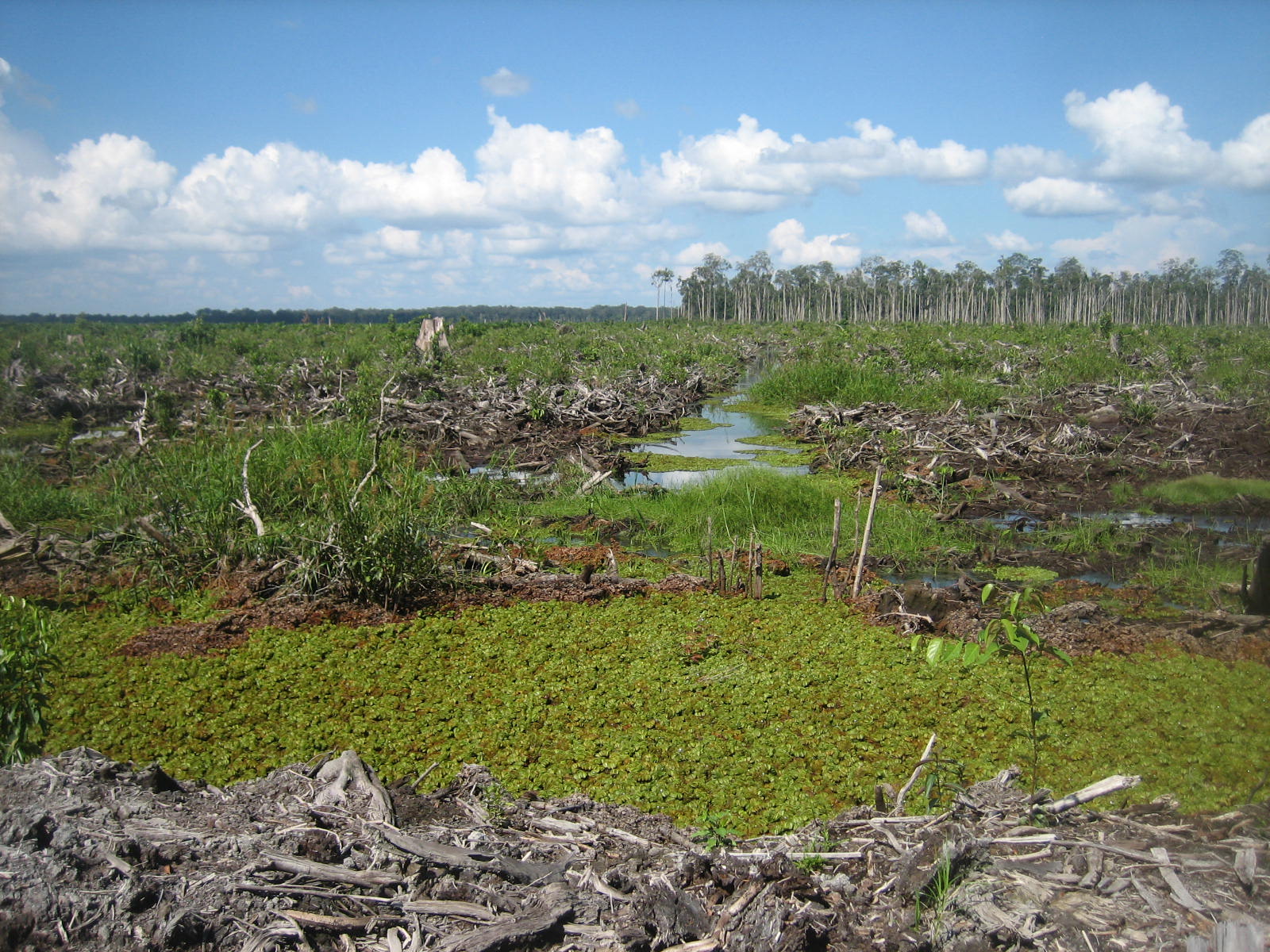
What is so special about peat?  To the untrained eye, these ecosystems appear as desolate swamps, with limited value, biodiversity- or other-wise.  To the seasoned wetland ecologist, the more apt question is what isn’t special about peat?  These long-neglected ecosystems are vital reservoirs of fresh water for us thirsty humans; they contain ten times as much carbon as all of the world’s forests, whilst occupying only 3% of the Earth’s surface; and house a rich diversity of species found nowhere else.  Yet as we begin to learn more about the world’s peatlands, we master the technologies needed to exploit them rapidly and irreversibly (Fig. 1).

IMG_2363

Fig. 1      A drained peatland in Indonesian Borneo, with young oil palm plants in the foreground and heavily degraded peat swamp forest in the background.

To be scientifically accurate, the irreversible component of peatland conversion is an assumption, wanting of sufficient evidence from “the field” due to the recent nature of large-scale exploitation.  But any ecosystem we see today is a product of its evolving past; a period over which it has encountered disturbances and presented a response.  From these patterns of responses, we can measure the resilience of the ecosystem (Cole et al., 2014) and develop hypotheses as to how it may respond to future disturbances.  In its simplest form, resilience is described as the ability of an ecosystem to maintain its structure and function despite perturbation (Holling, 1973).

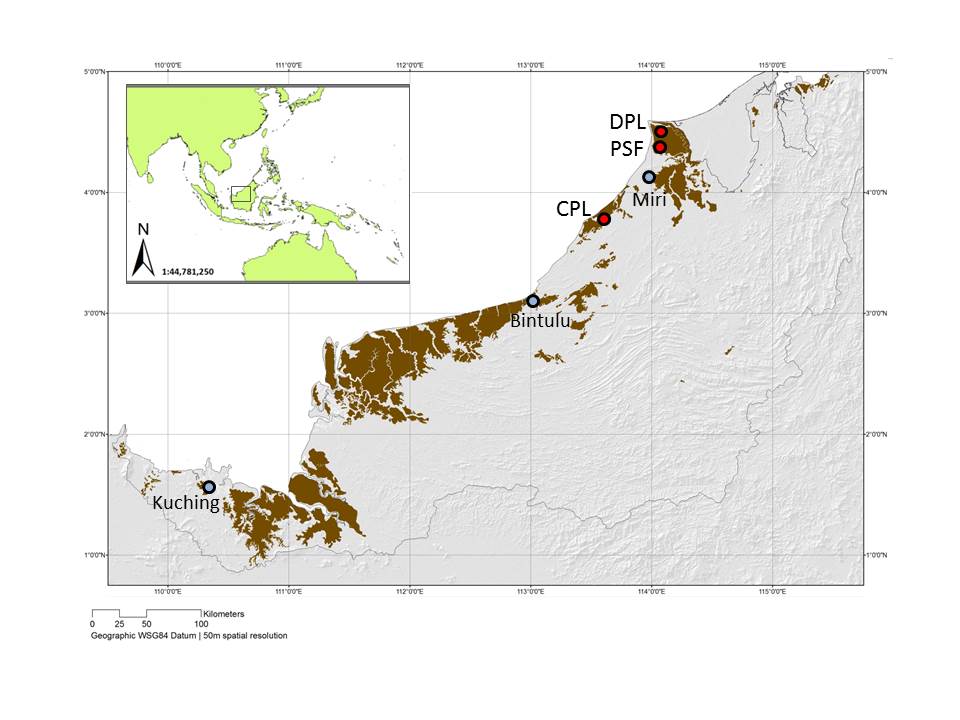
How resilient are peatlands?  Specifically, how have the tropical peat swamp forests of Southeast Asia responded to disturbance in the past?  We sought to answer these questions for the coastal peatlands of Sarawak, in Malaysian Borneo (Cole et al., 2015) (Fig. 2).

The plug is rapidly being pulled on these sweaty, mosquito-ridden jungles as industrial-scale agriculture spreads like wildfire across the region.  Dipterocarp forests, rich in a variety of fruit-bearing trees, ‘black-water’-adapted fish and nimble mammals, are being drained, flattened and converted into monoculture landscapes where oil palms (Elaeis guineensis) can quickly bring economic profit to even the inexperienced farmer.  Though wild-fires themselves are in fact a rare phenomenon in intact peatlands, the recent elevation in burning has been blamed primarily on the recent expansion of agriculture, and brought huge environmental, health and political challenges to the region.  But how frequent were fires in the past?  And what impact did they have on the vegetation?

Unlike in the temperate zone, tropical peat swamps are naturally forested.  It is the pollen grains and fern spores produced by this vegetation that provide the answers to our questions and insights into the resilience of these ecosystems.  Fossilised grains, deposited tens to millions of years in the past, are one of the primary datasets available in palaeoecology.  Often referred to as (the less archaic-sounding) long-term ecology, the discipline extends the scope of ‘short-term’ ecology through using deposited remains to study plants and animals and their interactions with the environments of the past.

We used pollen grains, fern spores and fossil charcoal to explore drivers and impacts of disturbance in three peatland areas in northern Borneo.  Peat cores were collected from three coastal sites in Sarawak (Fig. 2), where peat extends over approximately 13% of the States’ land surface.  The depths of the cores ranged from c. 1.5 to 3m, and radiocarbon dating of sediment samples from each demonstrated that they covered a period of 2000 to 7000 years before present (BP).

Sarawak_peatlands_map_division_labels_revised_JoE

Fig. 2      The three degraded peatland sites (red circles; DPL, PSF & CPL) from which cores were collected for this palaeoecological study, in Sarawak, Malaysian Borneo.  Sarawak’s peatlands are shown in brown and its major towns in blue.

Once I’d spent many more hours than I’d like to remember counting and identifying microscopic pollen grains, I was able to look for answers to our key research questions:

  • How has the vegetation in these peatland ecosystems changed through time?
  • What factors disturbed the peat swamp forest vegetation?
  • How did these ecosystems respond to the different disturbances?

Vegetation change

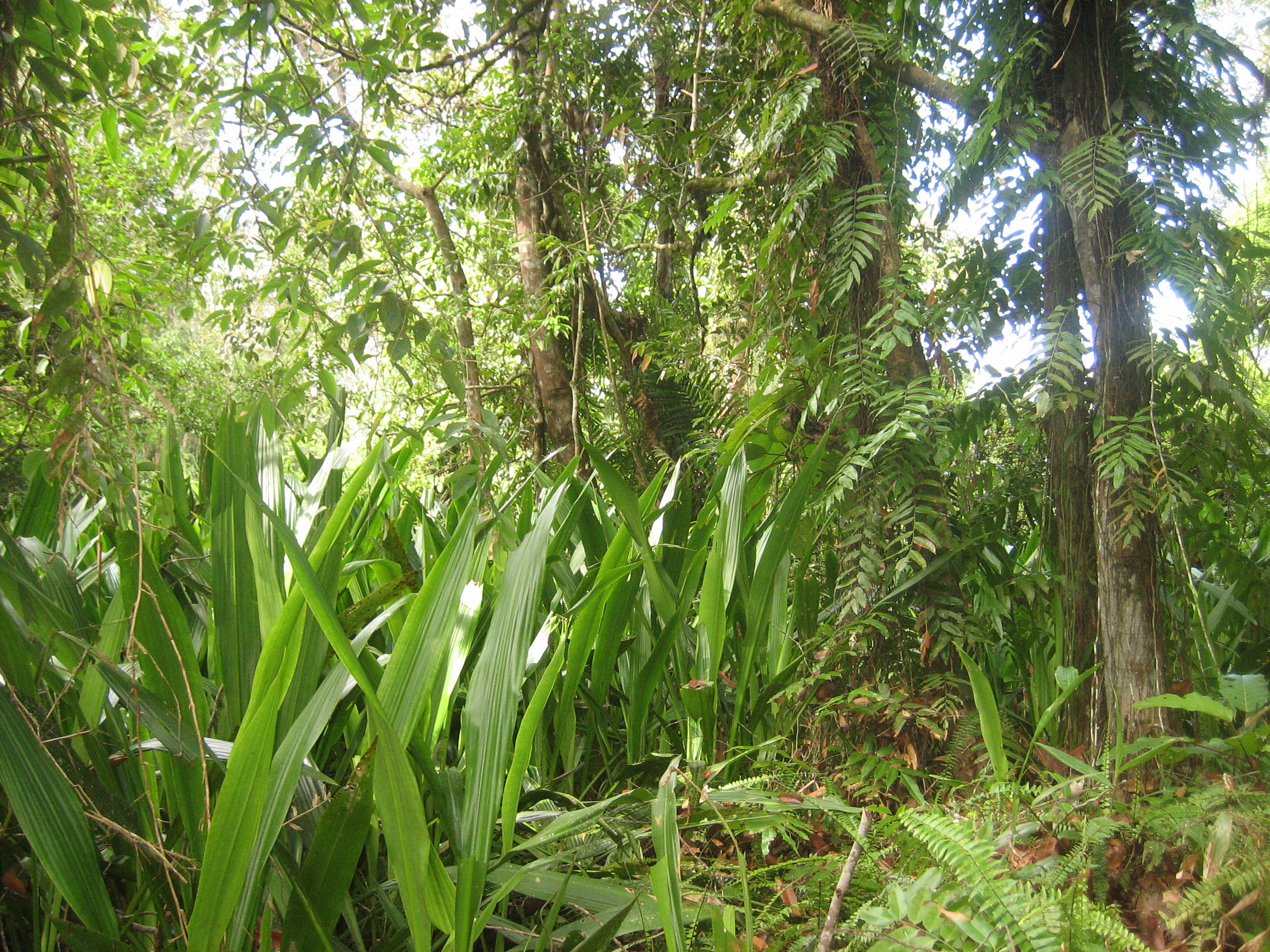
Our data demonstrated that peat swamp forest vegetation has persisted in these coastal peatlands since the onset of ecosystem development c. 4000yrs BP.  At this time, coastal progradation, resulting from sea-level fall, provided land suitable for peat to accumulate.  Apart from fluctuations between pioneer and mature peat swamp forest species over this period, reflecting local disturbances and dynamic internal responses (Fig. 3), the only significant vegetation change observed was shown in the last 500 years in two of the cores.  Increases in plant taxa associated with degraded peatlands suggested the introduction of humans and land use change to these coastal ecosystems.

PSF2-N_from_coring_site

Fig. 3      Relatively intact peat swamp forest patch, near to the site where the “PSF” core was extracted (Fig. 2).

Disturbances

There were three drivers of vegetation change that we focused on in this study, each with its associated palaeoecological proxy: climatic variability, such as El Niño Southern Oscillation (ENSO) activity, identified through a literature review; local and regional fire inferred from fossil macro- and microcharcoal respectively, and anthropogenic activity indicated by pollen and spores of plants common in open areas, such as grasses (Poaceae) and sedges (Cyperaceae).  The literature reported increasing intensity of ENSO events in this region over the late Holocene, subjecting northern Borneo to arid conditions.  Burning, both from local and regional fires, occurred throughout the past in all three sites, though elevated dramatically in the last c. 500 years in parallel with greater levels of open vegetation indicators.

Vegetation response

Only within the recent past, from c. 200-500 years BP, did the peat swamp forest vegetation show signs of being ‘disturbed’.  Prior to this period, episodes of more intense ENSO and burning did not appear to correspond with notable declines in the peat swamp forest taxa, suggesting ecosystem resilience to these forms of perturbation.  However, given that elevated levels of open vegetation indicators and charcoal do correlate with the declines observed in the recent past, and in the period when literature and interviews suggest humans started exploiting these environments, it is likely that anthropogenic activities are responsible.  Though a lack of sufficient data prevents us from inferring whether these changes equate to a recent loss of ecosystem resilience, we have made several conclusions:

  • These peat swamp forests have shown resilience to natural disturbances in the past;
  • Levels of disturbance within the last c. 500 years have exceeded those recorded in the previous 5000 years, and humans are the main culprits;
  • Recent, coincident instability and declines in peat swamp forest taxa suggest a notable anthropogenic impact on this ecosystem, potentially challenging the future persistence of these forests.

Back to the future

So, what more do we need to know about these vital* ecosystems?  Our study has provided some baseline data and information on the functioning of the coastal peat swamp forests of northern Borneo, but there are many other patches of peat around the island, and indeed the whole region to investigate.  In order to design more sustainable management practices for these unique ecosystems, it is important that we find out more about their ecology, past and present, and in particular their ability to respond to different disturbances.  With fire posing a major threat to the persistence of Southeast Asian peatlands, and the resultant carbon emissions posing a major threat to us, we need to gather insights from patterns of past recovery and build an understanding of peat swamp forest resilience.  And fast, before there’s no mud left.

*I hope I have convinced you of their extreme importance by now!


References

Cole, L.E.S., Bhagwat, S.A. & Willis, K.J. (2014) Recovery and resilience of tropical forests after disturbance. Nature Communications, 5:3906, 1-7. Doi: 10.1038/ncomms4906.

Cole, L.E.S., Bhagwat, S.A. & Willis, K.J. (2015) Long-term disturbance dynamics and resilience of tropical peat swamp forests. Journal of Ecology – Special Issue on Forest Resilience. Doi: 10.1111/1365-2745.12329.

Gaveau et al. (2014) Major atmospheric emissions from peat fires in Southeast Asia during non-drought years: evidence from the 2013 Sumatran fires. Nature, 4:6112. Doi: 10.1038/srep06112.

Holling, C.S. (1973) Resilience and stability of ecological systems. Annual Review of Ecology and Systematics, 4, 1–23.

Page, S.E., Siegert, F., Rieley, J.O., Boehm, H.-D.V., Jaya, A. & Limin, S. (2002) The amount of carbon released from peat and forest fires in Indonesia during 1997. Nature, 420, 61–65.