Thank you, David.

“His voice is more important to this world than ever before.”

(A quote from a short video from the BBC.)

Legend doesn’t even come close….nor Leo (though he’s doing an excellent job at trying).

As the final episode of Planet Earth II airs to a truly captivated nation, I felt inspired to write a quick post to thank Sir David for all of the wonderful work he has done in his last 90 years.  He, and Jane, have shown unmatched passion, respect and love for the natural world.  It is hugely humbling to share the Planet with them and all that they’ve dedicated their lives to showing us and to protecting.

I’d also like to spare a thought tonight for the couragious penguins of Zavodovsk Island.

Still time….Before the Flood?

This time last week I was feeling a strange mixture of distraught, angry and empowered.  The latter emotion primarily because nothing else seemed to be very important anymore, compared to the task in hand, i.e. sorting out the mess we’re rapidly making of our planet.

If you haven’t seen it yet, please watch Before the Flood.  It is an honest, hugely powerful portrayal of the challenges we’re facing with living “sustainably” on Earth, conveyed through the eyes of a very talented and passionate environmentalist*.  As UN Messenger of Peace for the Climate, Leonardo DiCaprio travels around the world for two years, observing the impact we are having on it, from the melting of the Arctic ice sheets to the burning of the peatlands of Southeast Asia.  It’s as beautiful as it is harrowing.

There are so many different ways we’re doing damage to the natural and semi-natural environments of this world; in some circumstances with a (dwindling) level of ignorance of the impacts and in some cases with full knowledge (and abandon) of them.  Hypocracy Money rules.  Trump got in.  The burning continues.

If we don’t all consider what’s going on out there, how we’re contributing to it, how we’re implicated in it (it is in our back yard) and tell the people above us that we care, the ecosystems on which we completely depend will continue to go to s**t.

Please watch it.

*As much as a multi-billionnaire (I presume, since millionnaires are old hat) can be an environmentalist….but he doesn’t shy away from the incongruities/inevitable hypocricy.  (If only a few more of the celebrity billionaires out there were as useful as this great chap.)

Beyond the Haze

Today, a short piece I wrote with several other C-PEAT-land scientists was published on the Journal of Applied Ecology blog.  Last October, whilst we were excitedly sharing our tales of new peatland findings at the inaugural workshop in New York, our beloved ecosystems were going up in smoke on the other side of the world.  Thousands of years of environmental history have burnt away over the last nine months in Southeast Asia, thanks to the natural phenomenon of El Niño.  It’s ofcourse absolutely nothing to do with our extensive draining of peatlands, subsequent compaction and complete conversion into oil palm and acacia plantations.  (There’s a blog post and paper to come on this.)

I’ve pasted our concerned correspondence below.

Beyond the Haze: Implications of the recent fires in Indonesia for tropical peatland research

This post was written by members of C-PEAT (Lydia Cole, Ian Lawson, Dave Beilman, Dan Charman and Zicheng Yu) to voice the group’s concern over the consequences of the recent extensive burning of Indonesia’s peatlands for science. C-PEAT (Carbon in Peat on Earth through Time) is a thematic group of PAGES (Past Global Changes), and had its inaugural meeting at Columbia University in New York, in October 2015.

Many reports and commentaries concerning the recent fires in Indonesia, including here, have been published over the last twelve months.  El Niño conditions, bringing drier weather to this part of Southeast Asia, in combination with extensive draining of peatlands, resulted in a tinder box that started burning in mid-August of 2015 and continued even as the world’s nations gathered at COP21 in Paris to discuss tools for sustainable forest management.

The consequences of these fires for society, the economy and the environment are still being quantified.  The areal extent of last year’s burning across Indonesia has been estimated to exceed 2.6 M ha (World Bank), with up to 90% of the subsequent haze resulting from peatland fires.  Peat volume losses over such a large area are likely to represent, by analogy with the 1997 fires (Page et al., 2002), a globally-significant loss of stored carbon.

While we share the widespread dismay at these social, economic and environmental consequences, we wish also to point out the loss to science represented by the apparently relentless destruction of Indonesia’s peatlands, a topic which was discussed at the inaugural PAGES Carbon in Peat on Earth through Time (C-PEAT) meeting last October.

Peatlands, which store atmospheric carbon as partially decomposed organic matter, provide a rich diversity of palaeo-proxies that can be used to measure the effect of past climatic change and human activity on ecosystems.  Akin to the loss of climate histories from disappearing glaciers worldwide (Savage, 2015), our library of environmental history in Indonesia is going up in smoke.  The importance of understanding the past will only increase as we enter historically unprecedented climatic regimes and environmental states, for which the prehistoric palaeoenvironmental record is a key resource for insights and analogies.

References

Page, S.E., Siegert, F., Rieley, J.O., Boehm, H-D.V., Jaya, A. & S. Limin. (2002) The amount of carbon released from peat and forest fires in Indonesia during 1997. Nature 420, 61-65.

Savage, N. (2015) Glaciology: Climatology on thin ice. Nature 520, 395-397.

Fledging the nest: an early career event for the next generation of Conservation Ecologists

A month ago, on Friday 4th March, I was involved in a workshop for young (as in PhD and postdoc ‘young’) ecologists that aimed to give them the tools they need to nail a career in Conservation Ecology.  With limited funds in conservation (which by no means reflects the funds required by the crisis discipline, as Waldron and his buddies write about here), but an urgent need to get bright, enthusiastic young things to take the reigns, we thought this was an apt event with which to kick-start the revived British Ecology Society Conservation Ecology Special Interest Group (BES ConEco SIG – not much more digestible as an acronym!).  The SIG’s revival is thanks to the hard work, enthusiasm and novel ideas of the unstoppable Dr Nathalie Pettorelli, based at the Zoological Society of London (ZSL).  It’s quite an honour to be part of the Committee, and I’m excited by what the future holds for the group and its jolly followers.

My main role during last month’s event was to gather material for some blog posts, to provide post-event information for those that couldn’t attend (it was a sell out!).  Pasted below is the first post I wrote: Blog 1 of a six part series.  I also wrote Blog 4.  The others were written by Claudia, Heather and Kath, and posted on the ZSL Wild Science blog, BES blog and Journal of Applied Ecology’s The Applied Ecologist’s Blog.  Hopefully there are a few bits and bobs of advice that might be useful within.


Fledging the nest: an early career event for the next generation of Conservation Ecologists

This piece is written by Lydia Cole, Rezatec, BES Conservation Ecology SIG Liaison Officer@lydcole, Katherine Baldock, University of Bristol, BES Conservation Ecology SIG Early Career Rep @Kath_Baldock, Claudia Gray, Zoological Society of London, BES Conservation Ecology SIG Communications Officer @ClaudiaLGray, Heather Crump, Aberystwyth University, BES Conservation Ecology SIG Early Career Rep @hec72012

This blog has also been posted on the BES and ZSL Wild Science blogs.

event 1

Last Friday heralded the first training event of the revived BES Conservation Ecology Special Interest Group: an interactive workshop for Early Career Conservation Ecologists. Jointly hosted by the Zoological Society of London and the British Ecological Society, the event brought together a herd of experts, working in fields ranging from journal editing, to university lecturing and policy, to guide early career attendees through five interactive sessions.

The philosophy behind the day was to provide an active learning opportunity where the bright, enthusiastic cohort of PhDs and postdocs currently trying to enter the world of conservation could learn a range of skills that would better equip them for this challenge. And they flocked in their numbers, with over 65 gathering at the London Zoo, in view of the kangaroos, having travelled from as far afield as Falmouth to the south and Durham to the north.

Universities are busy places, full of busy supervisors, who do not always have the time to impart knowledge on how the world (of conservation) works and how best to get into it; this workshop attempted to bring that knowledge into one room and encourage the early career enthusiasts to tap into it.

The day was divided into five sessions, each an hour long, where participants spread themselves across five thematic groups:

  1. Funding
  2. Press and online media profile building
  3. Networking and CV development for non-academic careers
  4. Interview skills for academic careers
  5. Publishing

event 2

At each ‘station’ ( = a round table + experts x 2 + useful materials + Post-its (of course!)), attendees were asked to perform a series of tasks to engage them with the theme, ranging from seeing how many “useful” new contacts they could make in a quick-fire networking break-out, to matching abstracts to journals, drafting a BES small grant application and put together a communication strategy for a paper about to be published. In between tasks, there was plenty of time to mine the knowledge of the experts, who must have answered several thousand questions over the course of the day (thank you, experts!). And throughout, there was not a lecture in sight!

Informal feedback tells us it was a day well received:

To mark the event and share the knowledge gained from it, we will be running a series of blogs over the coming fortnight, with each post focusing one of the five workshop themes. So if you missed the event, check out the blogs….and watch out for the invitation to #conscareers17!

And remember: you can easily keep up-to-date with the Conservation Ecology SIG news by following us on Twitter @BESConservation and Facebook through the BES Conservation Ecology group page. Alternatively, you can join our mailing list by dropping an email toNathalie.Pettorelli@ioz.ac.uk

My name is PEAT!

(Thank you, RSPB website.)

I stumbled/googled upon this a few days ago, and thought it was too good to go unreported.  Led by the rap artist, Ed Holden, a bunch of superstars from Pentrefoelas and Ysbyty Ifan Schools (had to copy and paste those names) have joined forces to show us all how important looking after our peatlands is.  It is half in Welsh.  And it is wholly inspired.

Of a slightly different tone,  The Importance of Scotland’s Peatlands also hit the big (YouTube) screen at the start of the month.  Another informative watch if you feel your knowledge of peat is wanting.

And whilst I’m posting about creative projects that can spread information and inspire interest for these precious ecosystems, here is the winner of the World Wetlands Day Poetry Prize: In My Other Life, by Virginia Creer.

The A(FC) Team.

I’ve been meaning to write this short ‘shout-out’ post ever since I joined the team.  Definitely better late than never though, especially since Action For Conservation are very much in their infancy: they’ve fledged the nest, but aren’t yet soaring over the human-dominated matrix that blankets much of England.

Action for Conservation (the AFC team) was born out of Oxford University’s MSc. in Biodiversity, Conservation and Management, when several astute and enthusiastic graduates, and their young-professional friends, observed a large gap in environmental education in UK secondary schools.  Along with the curriculum cavity in teaching, the neglect of exposing students to ‘nature’ (whatever that is exactly), the lack of explaining the complexity of environmental change and anthropogenic impact, there seemed little to no opportunity for young people to learn how to get involved in conservation themselves, whether as a volunteer or as a professional.  Do students even know what conservation means?  Do you have to spend most of your time smelly and in trees to be a conservationist?  Or live in Africa with lions?

Nope.  And these are some of the common misconceptions the AFC Team are trying to rebuff.  With only one paid member of staff (an excellent, hardworking one at that, Ms. Huggett), the majority of the educating is done by a team of volunteers (AFC Gurus, e.g.), themselves young professions somehow involved in conservation work.  I am honoured to be one of these.  We go into secondary schools (or forests) across the country and run an hour to three hours workshop where the students generally spend more time pretending to be a Lynx than sitting down on their bottoms.  Our aim is to have them able to answer these three questions by the end of the fun-shop:

  1. What is conservation?
  2. What range of different careers, jobs, hobbies, games, food choices, local activities….come under the conservation umbrella?
  3. How can I get involved in conservation?

Once they’ve realised that sitting on the floor won’t kill them, that peat is not disgusting, and that it’s as cool to know about hockeystick fish as it is about Justin Bieber, they become captivated by the words coming from these enthusiastic, sometimes bearded, young mouths.

Conservationists are so cool, they think, I hope.

If you’re a budding AFC Guru, or would like to get involved in any way, do get in touch with the team by emailing info@actionforconservation.org or follow them on Twitter (@Action4Conserv).  And to whet your appetite, here is the inspiring January 2016 Newsletter.  I support this initiative 100% and am so happy to be involved.  This AFC Team has a vital mission: to spread a passion for the natural, and semi-natural world, and instill in people a responsibility to sustainably manage it NOW.  And who better to start spreading the message to than the ones who still know how to listen, them kids.

NHS for Soils needed!

Every month, the Parliamentary Office of Science and Technology releases several publications, known as POSTnotes, that aim to provide an easily digestible overview of research in different areas of science and technology, as a tool for policy makers.  One released this month is all about securing UK soil health, in additional to the principally-important parts about peat.  I’d definitely recommend reading it if you’re interested in learning of the current status and threats to this ‘renewable resource’.

Renewable is a slightly misleading word.  Peat is a renewable resource if we wait about 3,000 years between harvests.  Fossil fuels could also be renewable if we could hold off popping the kettle on again for another 300 million years or so.  There should probably be a time frame attached to each use of renewable, and a conservative one at that, based on the Precautionary Principle.

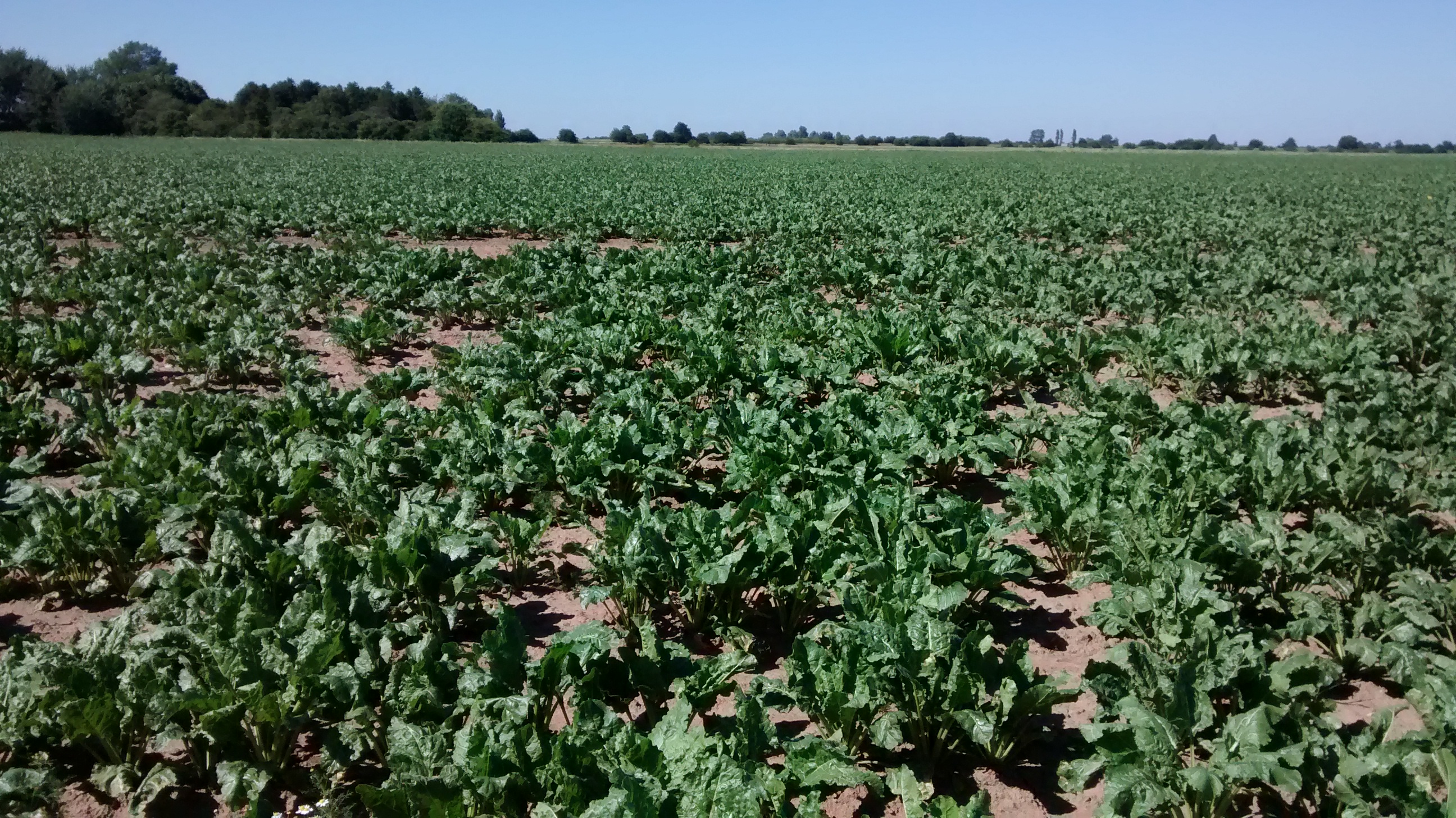
A maturing sugarbeet field in East Anglia.

A maturing sugar beet field in East Anglia.

We basically need some, or even one coherent and policeable policy that governs sustainable soil management in the UK (and Europe), so that we can adhere to the Government’s plan to “grow more, buy more and sell more British food” over the next 25 years.  The world needs our sugar beet and broad beans.  And we all so desperately need our soils.

Caged.

Every so often, the legend that is Corey Bradshaw publishes a Cartoon guide to biodiversity loss.  This one made me especially sad.  Perhaps because I saw several great people of the trees, stretching between bars in 4x4m round cages that they had been in for 20+ years, almost non-stop, in an orangutan care centre in Pangkalan Bun, Central Kalimantan, last year.  They didn’t have a home to go back to, and couldn’t be let out into the small patch of enclosed forest that the smaller orangs could hang around in during set ‘play’ times, in case they caused a problem.  Did we not cause their problem?

Retreating from peat!

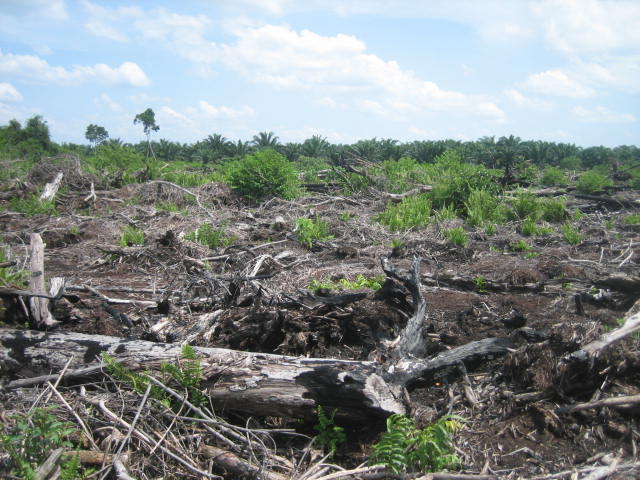
A degraded tropical peatland in Borneo, with an approximately five year old oil palm plantation in the distance.

A deforested and drained tropical peatland in Borneo, with an approximately five year old oil palm plantation in the distance.

(I also just published this on the UK Tropical Peatland Working Group website.  Worth a quick gander!)

Asia Pulp and Paper (APP) has decided to ‘immediately retire’ approximately 7,000 hectares of its acacia plantations in Indonesia, with the goal of restoring them to intact peat swamp forest and developing a peatland best management practice model.  This is a bold move, forfeiting profits to comply with their Forest Conservation Policy (FCP).  Just over a year ago, they proved to be conservation forerunners again, (loudly) announcing to ‘protect and restore’ one million hectares of forest.  These come as welcome actions from APP, after it spent many years (and still is?) leading the deforestation frontier across Sumatra and Kalimantan, replacing hugely diverse ecosystems with monoculture plantations, and draining many a peatland along the way.

As Wetlands International say, there’s still a long way to go before APP can claim to be conserving, rather than destroying peatlands.  For example, how do they plan to rewet the peatlands?  What species are they going to plant into the current monocultures, and when?  How will they manage fire risk (heightened this year by ENSO) and potential flooding?   What will be the likely carbon emissions under different restoration strategies?  These are all important questions that researchers can help to answer.  Members of the UK Tropical Peatland Working Group are certainly on the case (watch this space).

But APP have given us a goal to hold them accountable to….and we must.

More information on the restoration mission from Deltares, APP’s independent peat expert team, can be found here.

Peat’s muddy past

Today, at some point, the Special Feature on Forest resilience, tipping points and global change processes will be published by the Journal of Ecology.  With some tweeking, I managed to get an article accepted in it, showcasing the work I presented at the symposium of the same name at INTECOL, back in 2013.  And here is the article I wrote to accompany it, freshly posted on the Journal’s blog.

Unashamedly, this post is all about peat!  More on Tanzania very soon though, when I find time in between Christmas preparations and gluttony.

****

What is so special about peat?  To the untrained eye, these ecosystems appear as desolate swamps, with limited value, biodiversity- or other-wise.  To the seasoned wetland ecologist, the more apt question is what isn’t special about peat?  These long-neglected ecosystems are vital reservoirs of fresh water for us thirsty humans; they contain ten times as much carbon as all of the world’s forests, whilst occupying only 3% of the Earth’s surface; and house a rich diversity of species found nowhere else.  Yet as we begin to learn more about the world’s peatlands, we master the technologies needed to exploit them rapidly and irreversibly (Fig. 1).

IMG_2363

Fig. 1      A drained peatland in Indonesian Borneo, with young oil palm plants in the foreground and heavily degraded peat swamp forest in the background.

To be scientifically accurate, the irreversible component of peatland conversion is an assumption, wanting of sufficient evidence from “the field” due to the recent nature of large-scale exploitation.  But any ecosystem we see today is a product of its evolving past; a period over which it has encountered disturbances and presented a response.  From these patterns of responses, we can measure the resilience of the ecosystem (Cole et al., 2014) and develop hypotheses as to how it may respond to future disturbances.  In its simplest form, resilience is described as the ability of an ecosystem to maintain its structure and function despite perturbation (Holling, 1973).

How resilient are peatlands?  Specifically, how have the tropical peat swamp forests of Southeast Asia responded to disturbance in the past?  We sought to answer these questions for the coastal peatlands of Sarawak, in Malaysian Borneo (Cole et al., 2015) (Fig. 2).

The plug is rapidly being pulled on these sweaty, mosquito-ridden jungles as industrial-scale agriculture spreads like wildfire across the region.  Dipterocarp forests, rich in a variety of fruit-bearing trees, ‘black-water’-adapted fish and nimble mammals, are being drained, flattened and converted into monoculture landscapes where oil palms (Elaeis guineensis) can quickly bring economic profit to even the inexperienced farmer.  Though wild-fires themselves are in fact a rare phenomenon in intact peatlands, the recent elevation in burning has been blamed primarily on the recent expansion of agriculture, and brought huge environmental, health and political challenges to the region.  But how frequent were fires in the past?  And what impact did they have on the vegetation?

Unlike in the temperate zone, tropical peat swamps are naturally forested.  It is the pollen grains and fern spores produced by this vegetation that provide the answers to our questions and insights into the resilience of these ecosystems.  Fossilised grains, deposited tens to millions of years in the past, are one of the primary datasets available in palaeoecology.  Often referred to as (the less archaic-sounding) long-term ecology, the discipline extends the scope of ‘short-term’ ecology through using deposited remains to study plants and animals and their interactions with the environments of the past.

We used pollen grains, fern spores and fossil charcoal to explore drivers and impacts of disturbance in three peatland areas in northern Borneo.  Peat cores were collected from three coastal sites in Sarawak (Fig. 2), where peat extends over approximately 13% of the States’ land surface.  The depths of the cores ranged from c. 1.5 to 3m, and radiocarbon dating of sediment samples from each demonstrated that they covered a period of 2000 to 7000 years before present (BP).

Sarawak_peatlands_map_division_labels_revised_JoE

Fig. 2      The three degraded peatland sites (red circles; DPL, PSF & CPL) from which cores were collected for this palaeoecological study, in Sarawak, Malaysian Borneo.  Sarawak’s peatlands are shown in brown and its major towns in blue.

Once I’d spent many more hours than I’d like to remember counting and identifying microscopic pollen grains, I was able to look for answers to our key research questions:

  • How has the vegetation in these peatland ecosystems changed through time?
  • What factors disturbed the peat swamp forest vegetation?
  • How did these ecosystems respond to the different disturbances?

Vegetation change

Our data demonstrated that peat swamp forest vegetation has persisted in these coastal peatlands since the onset of ecosystem development c. 4000yrs BP.  At this time, coastal progradation, resulting from sea-level fall, provided land suitable for peat to accumulate.  Apart from fluctuations between pioneer and mature peat swamp forest species over this period, reflecting local disturbances and dynamic internal responses (Fig. 3), the only significant vegetation change observed was shown in the last 500 years in two of the cores.  Increases in plant taxa associated with degraded peatlands suggested the introduction of humans and land use change to these coastal ecosystems.

PSF2-N_from_coring_site

Fig. 3      Relatively intact peat swamp forest patch, near to the site where the “PSF” core was extracted (Fig. 2).

Disturbances

There were three drivers of vegetation change that we focused on in this study, each with its associated palaeoecological proxy: climatic variability, such as El Niño Southern Oscillation (ENSO) activity, identified through a literature review; local and regional fire inferred from fossil macro- and microcharcoal respectively, and anthropogenic activity indicated by pollen and spores of plants common in open areas, such as grasses (Poaceae) and sedges (Cyperaceae).  The literature reported increasing intensity of ENSO events in this region over the late Holocene, subjecting northern Borneo to arid conditions.  Burning, both from local and regional fires, occurred throughout the past in all three sites, though elevated dramatically in the last c. 500 years in parallel with greater levels of open vegetation indicators.

Vegetation response

Only within the recent past, from c. 200-500 years BP, did the peat swamp forest vegetation show signs of being ‘disturbed’.  Prior to this period, episodes of more intense ENSO and burning did not appear to correspond with notable declines in the peat swamp forest taxa, suggesting ecosystem resilience to these forms of perturbation.  However, given that elevated levels of open vegetation indicators and charcoal do correlate with the declines observed in the recent past, and in the period when literature and interviews suggest humans started exploiting these environments, it is likely that anthropogenic activities are responsible.  Though a lack of sufficient data prevents us from inferring whether these changes equate to a recent loss of ecosystem resilience, we have made several conclusions:

  • These peat swamp forests have shown resilience to natural disturbances in the past;
  • Levels of disturbance within the last c. 500 years have exceeded those recorded in the previous 5000 years, and humans are the main culprits;
  • Recent, coincident instability and declines in peat swamp forest taxa suggest a notable anthropogenic impact on this ecosystem, potentially challenging the future persistence of these forests.

Back to the future

So, what more do we need to know about these vital* ecosystems?  Our study has provided some baseline data and information on the functioning of the coastal peat swamp forests of northern Borneo, but there are many other patches of peat around the island, and indeed the whole region to investigate.  In order to design more sustainable management practices for these unique ecosystems, it is important that we find out more about their ecology, past and present, and in particular their ability to respond to different disturbances.  With fire posing a major threat to the persistence of Southeast Asian peatlands, and the resultant carbon emissions posing a major threat to us, we need to gather insights from patterns of past recovery and build an understanding of peat swamp forest resilience.  And fast, before there’s no mud left.

*I hope I have convinced you of their extreme importance by now!


References

Cole, L.E.S., Bhagwat, S.A. & Willis, K.J. (2014) Recovery and resilience of tropical forests after disturbance. Nature Communications, 5:3906, 1-7. Doi: 10.1038/ncomms4906.

Cole, L.E.S., Bhagwat, S.A. & Willis, K.J. (2015) Long-term disturbance dynamics and resilience of tropical peat swamp forests. Journal of Ecology – Special Issue on Forest Resilience. Doi: 10.1111/1365-2745.12329.

Gaveau et al. (2014) Major atmospheric emissions from peat fires in Southeast Asia during non-drought years: evidence from the 2013 Sumatran fires. Nature, 4:6112. Doi: 10.1038/srep06112.

Holling, C.S. (1973) Resilience and stability of ecological systems. Annual Review of Ecology and Systematics, 4, 1–23.

Page, S.E., Siegert, F., Rieley, J.O., Boehm, H.-D.V., Jaya, A. & Limin, S. (2002) The amount of carbon released from peat and forest fires in Indonesia during 1997. Nature, 420, 61–65.